
Poverty by Design: Food Insecurity and Our Food Systems
How our food systems keep us hungry
There is a clear paradox whereby food insecurity continues to rise in high-income countries. This phenomenon is not a consequence of economic disparities alone but linked to our global food systems
Our current food systems serve a singular purpose, which is to sell food, primarily driven by profit motives. The majority of this food is ultra-processed.
Now the plot twist is that its not by accident!
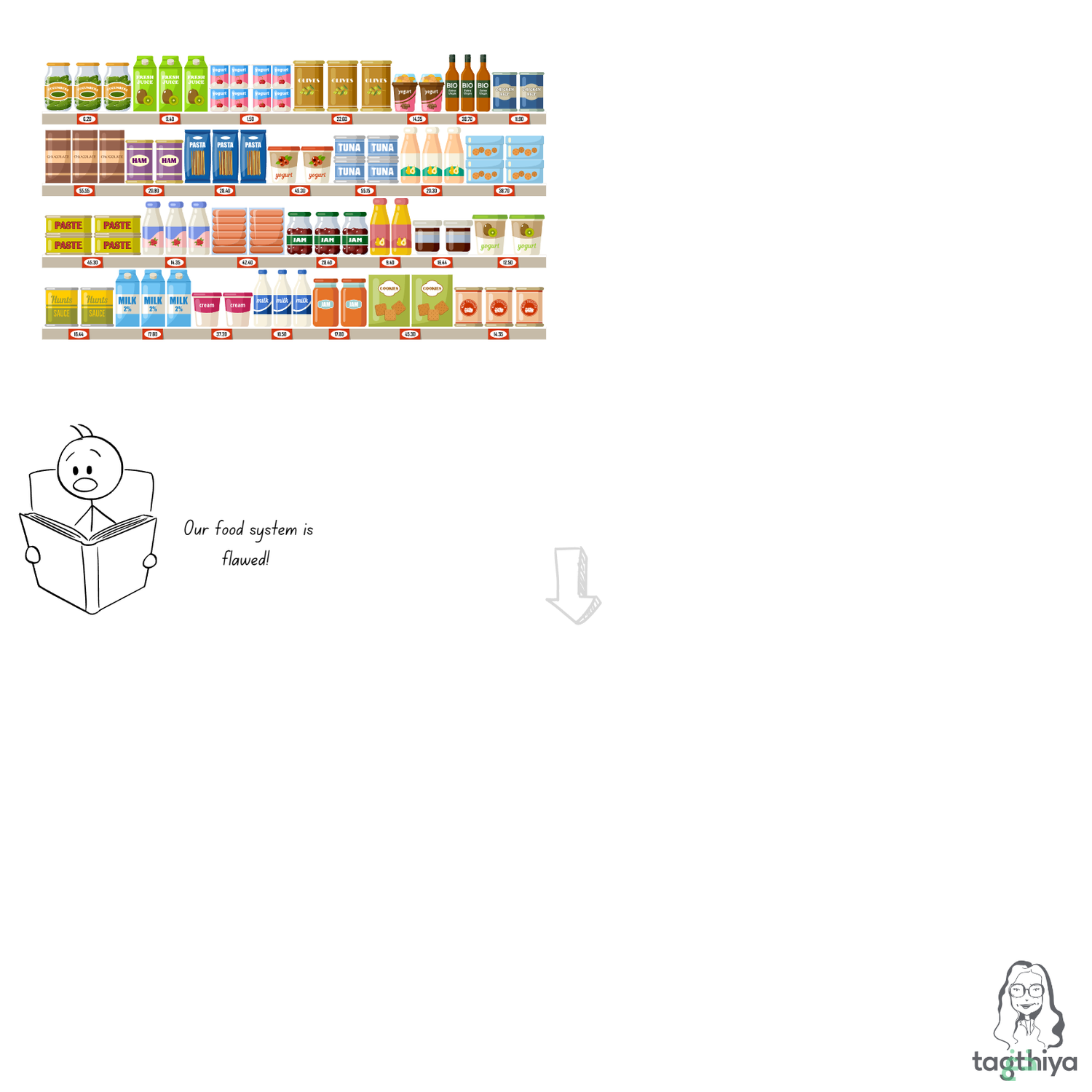
Imagine you’re walking down a supermarket aisle. To your left, plenty of packages of appealing chips, “promising” crunch satisfaction. To your right, sugar cereals with bolded signs of “fortified with vitamins”. But, where is the affordable, fresh produce?
Oh right - the fresh produce is in a lonely corner and incredibly overpriced!
Our current food systems weren’t designed to allow people to access healthy, nutritious and affordable food. Ultra-processed food make up over 50% of daily caloric intake in countries like the U.S., Canada and the U.K.
Why? because such foods are cheap to make, easy to sell, and addictive enough.
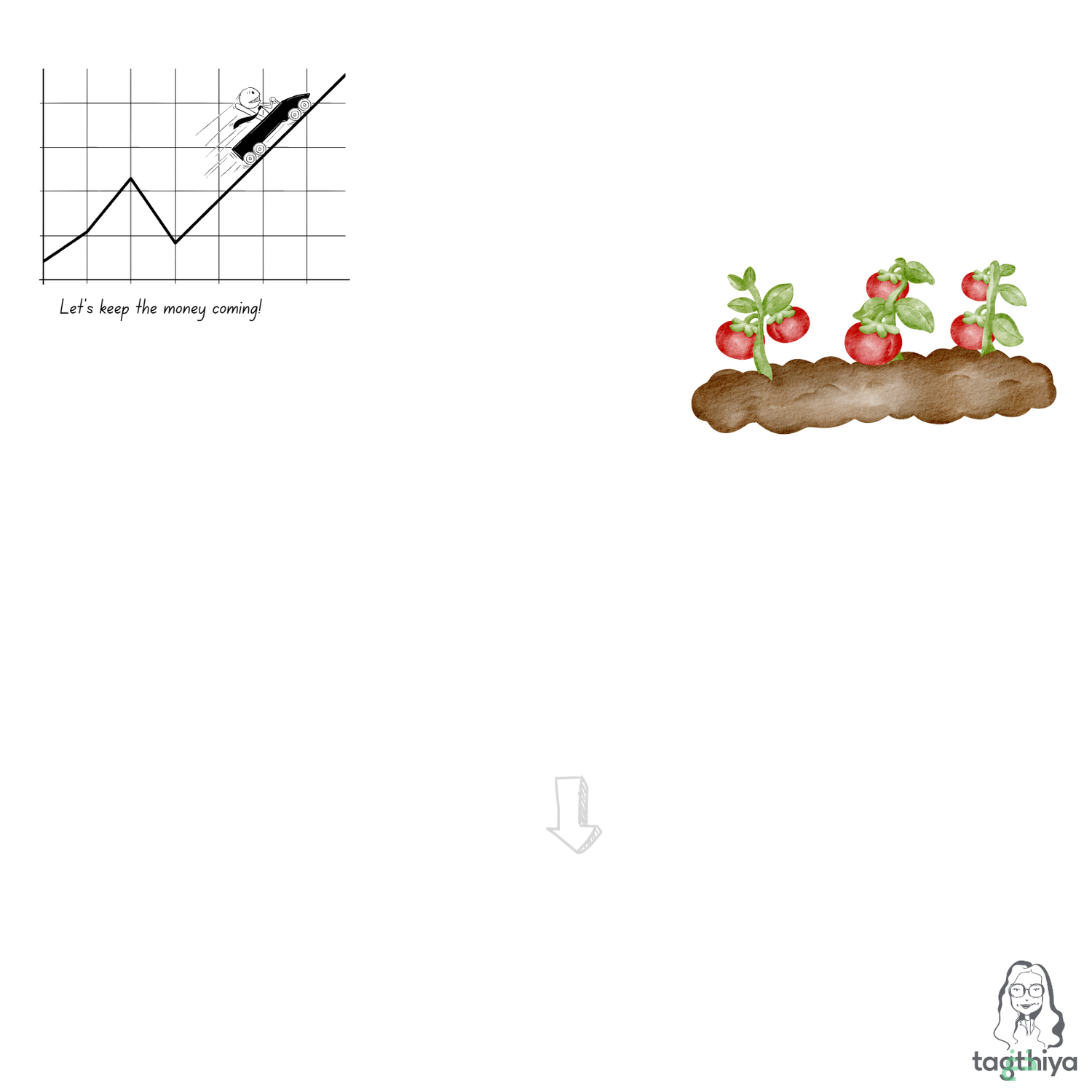
Now picture this again, a farmer grows a tomato. It’s fresh and nutritious but costs quite a bit to transport. A company takes those tomatoes and turns that into ketchup - add to it some sugar, salt, preservatives - and make it shelf stable for months.
This would suddenly cost a fraction to distribute and can be sold at a greater amount. For companies, this is the smart way. For your health? Not so much.
While ultra-processed foods may appear more affordable in the short term, their hidden costs—obesity, diabetes, and reduced productivity— make them expensive for individuals and health systems in the long run.
This is not only a health crisis, but also a social justice issue. Food insecurity disproportionately impacts low-income families who are caught in a web of unaffordable healthy food, predatory marketing, and systemic neglect.

“Ta ذغ iya” by Sarah Zahr
That is why we need to transform our food system. This involves building a fair, efficient, and sustainable food system to guarantee access to healthy food for everyone, while also protecting the environment, and empowering marginalized communities
Monteiro, C. A., Cannon, G., Moubarac, J. C., Levy, R. B., Louzada, M. L., & Jaime, P. C. (2018). Ultra processed foods: What they are and how to identify them. Public Health Nutrition, 21(1), 5–12.
Hosseinpour-Niazi, S., Niknam, M., Amiri, P., Mirmiran, P., Ainy, E., Izadi, N., ... & Azizi, F. (2024). The association between ultra-processed food consumption and health-related quality of life differs across lifestyle and socioeconomic strata. BMC public health, 24(1), 1955.