
The Grand Chess Match : Product Placement in Supermarkets The Opening Move: Entryway Essentials
Welcome to "The Grand Chess Match," where the food and beverage industry meets the consumer in an everyday setting—the supermarket. Prepare to lace up your shopping shoes and grip your cart tightly; this post is about to explore the tactics behind the grocery store layout, shelf by shelf, and product by product.
As you enter the supermarket, notice the brightly colorful displays strategically positioned to capture the attention of both you and your children. These are no random placements. From the entrance, the battle for your basket begins, setting the stage for your shopping experience.
The Pawns: High-Traffic Aisles Knights and Rooks: Strategic Positioning
Food companies utilize a variety of tactics to market to children, specifically, in supermarkets, including child- targeted marketing messages on product packages, special displays to attract children’s attention, and even mini-events and contests at retailers.
Venture a little further, and you'll find yourself navigating the high- traffic aisles: areas where promotional items and seasonal products make their stand. It’s here that supermarkets often host mini-events to engage you and your children. This area is also where brands compete fiercely both your attention.
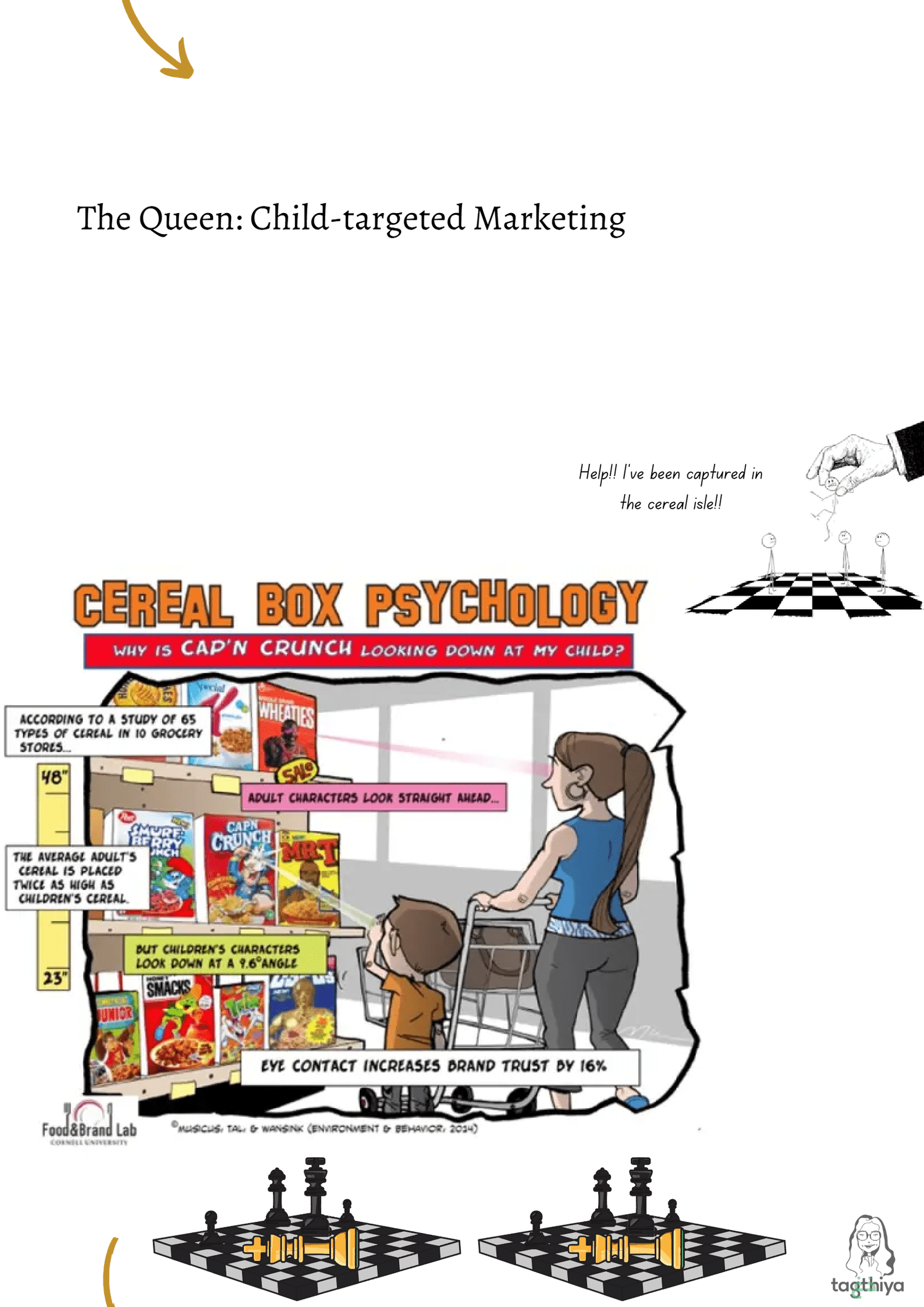
Research has shown over and over again that children influence adult purchases = this is often referred to as “ pester power”. That is why supermarkets often place kid-friendly products at eye-level to maximize visibility to children
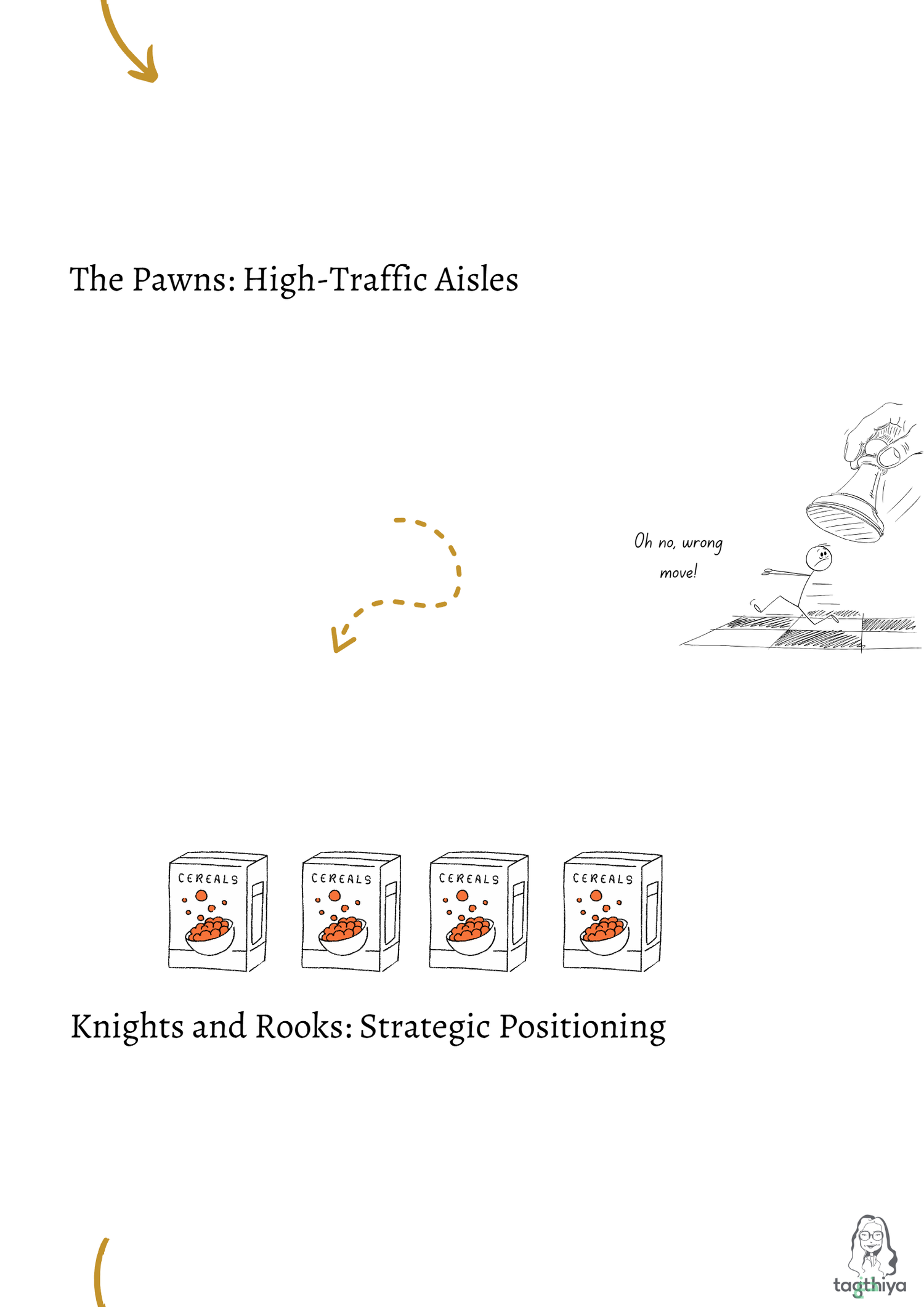
Turn the corner, and you might stumble upon shelves where sugary cereals and snacks, for instance, are often found adjacent to essential items like milk or bread.
The Queen: Child-targeted Marketing
This placement strategy is meant to link routine purchases with indulgent treats, a common tactic by the Food and Beverage Industry.
Here, colorful packaging and familiar cartoon faces reign supreme, right where small hands can easily reach them. This is no accident; it's a calculated move. The placement of snacks that children love, such as cookies and sugary drinks, are often positioned next to staple items to create a mental association of fun with routine shopping.
A clear example by behavior scientists on product placement
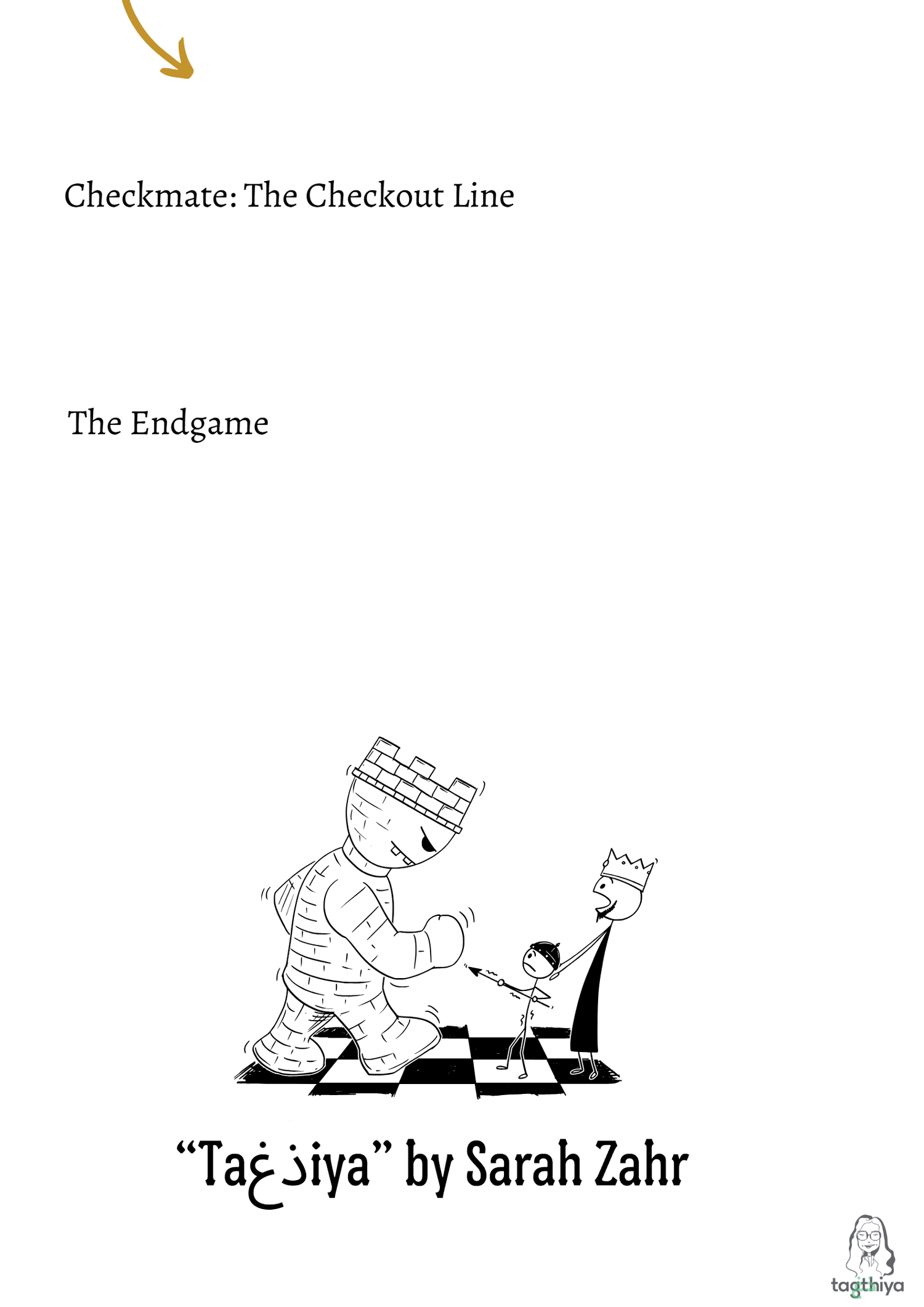
Checkmate: The Checkout Line The Endgame “Ta ذغ iya” by Sarah Zahr
Research shows that young children (aged 4-6 years) exhibit a strong preference for foods packaged with popular cartoon characters.
Finally, as you wheel your way to the checkout line, the so-called “impulse buy section”, you will find yourself reaching the final play in this chess game. This area is littered with tempting snacks and candies- a zone where last-minute decisions are influenced by fatigue.
By understanding the strategic placement of products within supermarkets, you gain a valuable insight into the consumer chess game played by the food and beverage industry.The layout of supermarkets is not random but a carefully crafted strategy optimized for additional sales.
After all, forewarned is forearmed, and in this grand chess match, you're no mere pawn.
L. Harris, Jennifer, Victoria Webb, Shane J. Sacco, and Jennifer L. Pomeranz. "Marketing to children in supermarkets: An opportunity for public policy to improve children’s diets." International Journal of Environmental Research and Public Health 17, no. 4 (2020): 1284.