
Colonial Relations of Power in Global Food Governance

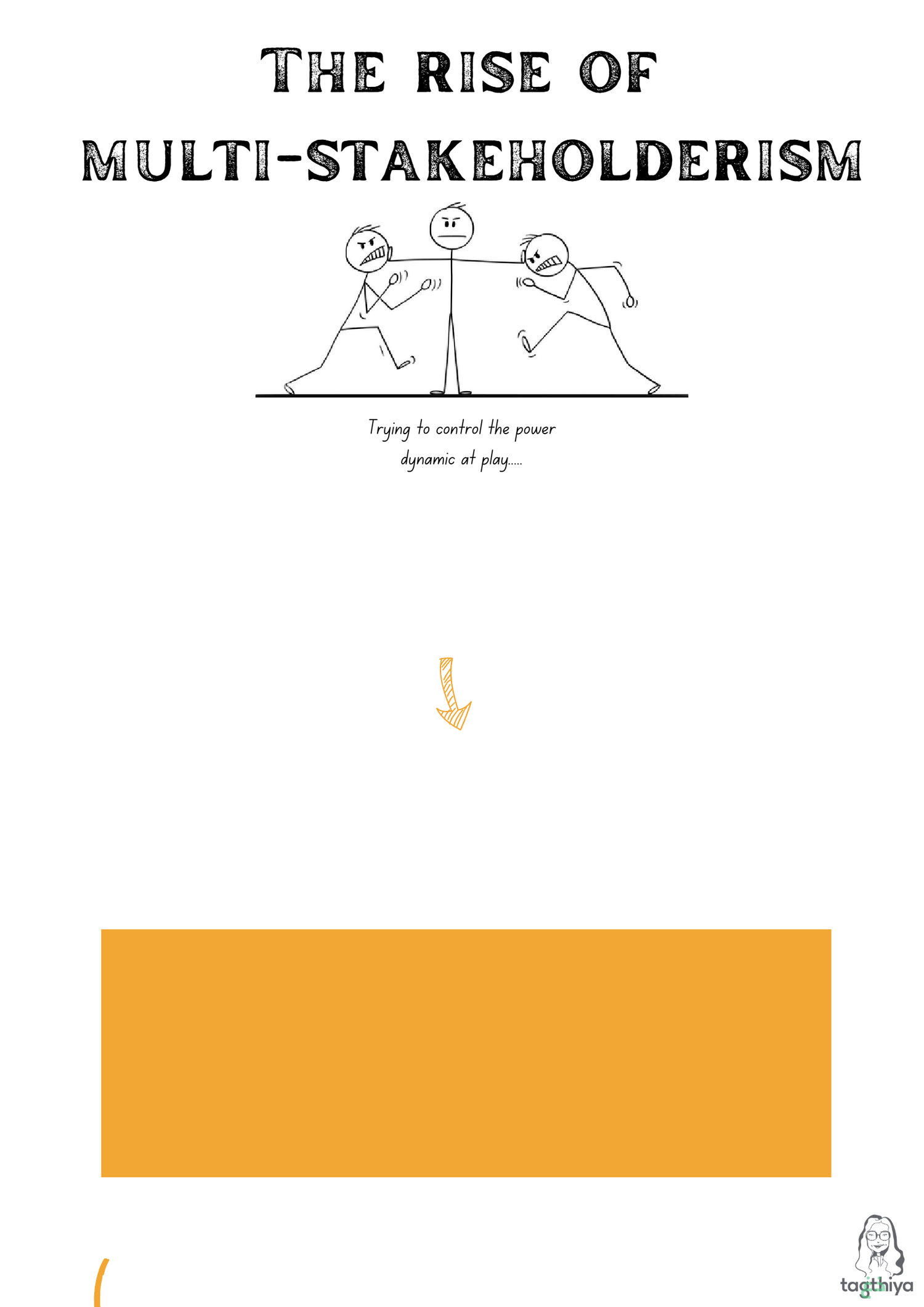
The rise of multi-stakeholderism
The global food system in its present form is unhealthy and unsustainable. To address this challenge, many food systems experts and authoritative organisations have called for the transformation of global food governance system.
The food and beverage industry has attempted to promote and initiate public–private and multi-stakeholder partnerships, a development that coincides with the emergence of multi-stakeholderism as a prominent model of for global food governance.
The rise of multi-stakeholder institutions (MIs) involves various actors inclduing governments, civil society, and notably, the ultra-processed food industry . While MIs aim to address complex food system challenges, their composition raise critical concerns about the power dynamics at play.
Ultra-processed food giants like Unilever, Nestlé, PepsiCo, and The Coca-Cola Company don't just participate in multi- stakeholder institutions— they dominate .
Almost half of the board seats in these MIs are occupied by executives from these companies.
This centralization of power begs the question: Are these MIs really serving the public interest, or are they just another platform for corporate agendas?
However, their presence often tilts the balance of decision- making in favor of corporate interests, sidelining crucial public health priorities.
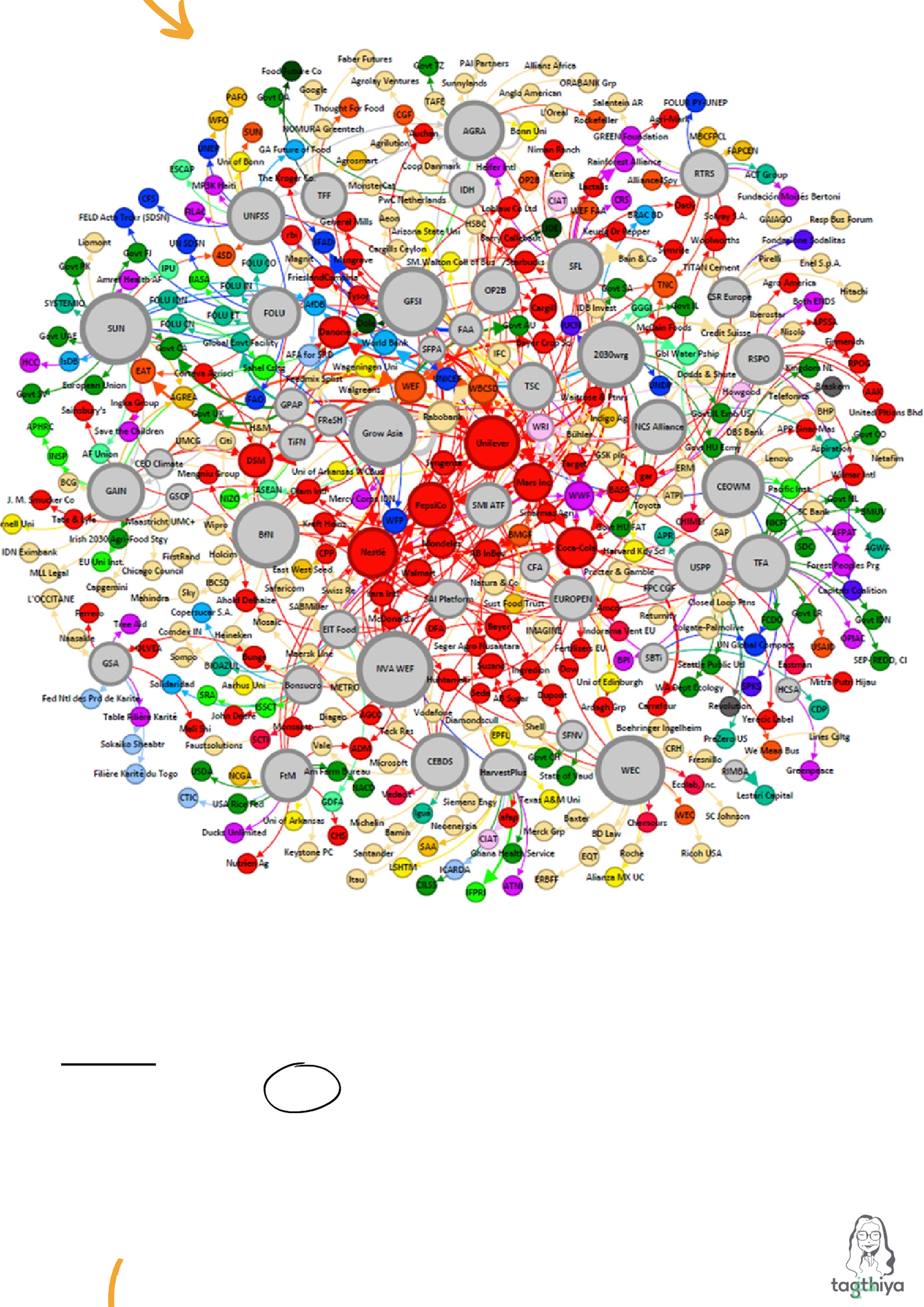
Slater et al. (2024)
This figures showcases the network of global food system MIs, their board member links and food system actors.
The lines represent the links between board member employment afliation and global MIs. The circle size is proportionate to the number of ‘links’ the organization has with others in the network. C o l o u r s —light grey circles represent global food system MIs; red circles represent ultra-processed food corporations (manufacturers, ingredient suppliers, retailers) etc. (for more info- check out the article cited at the end!)
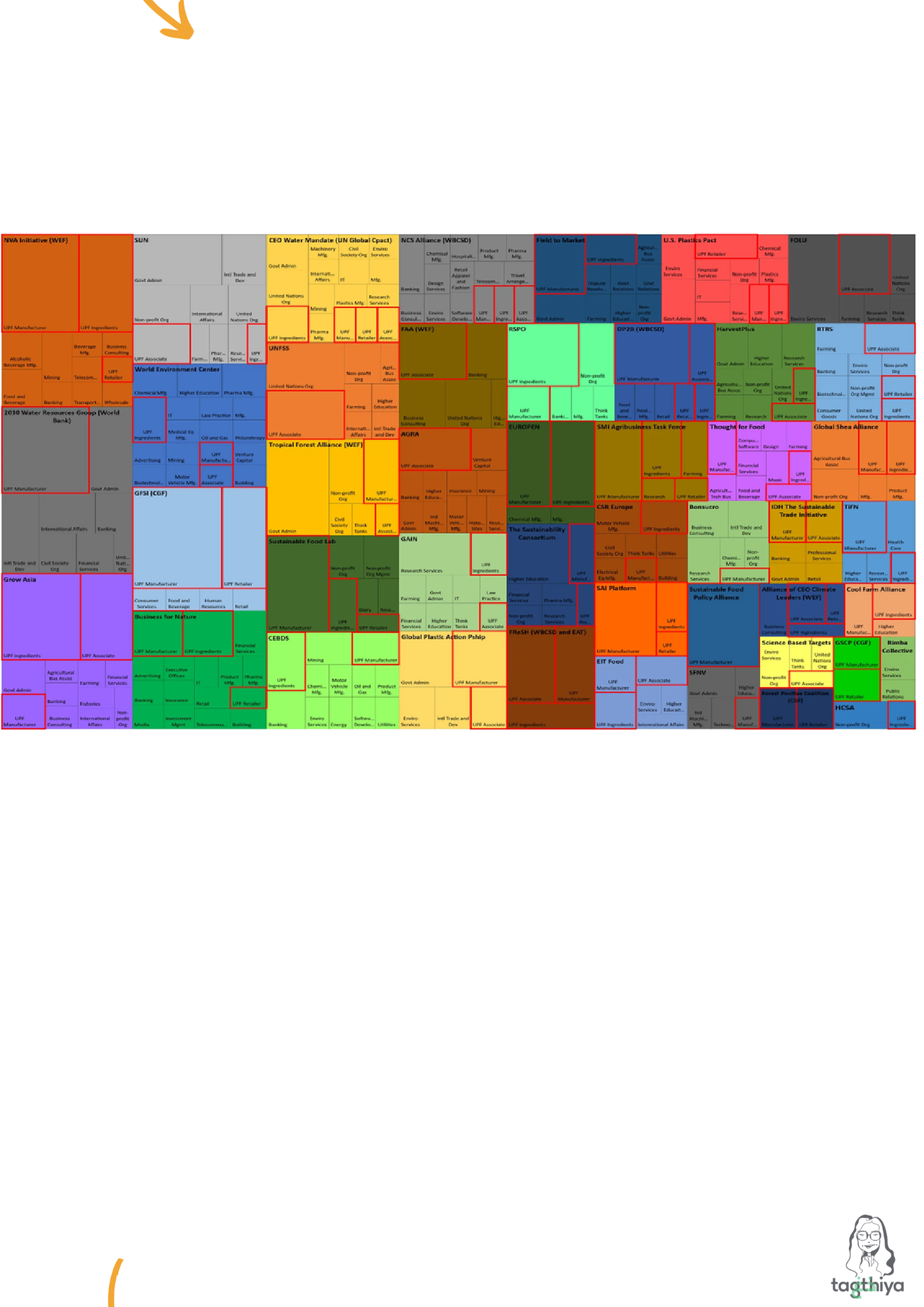
Now check this out, the below figure lay outs the distribution of each multi-stakeholder institution board composition by members industry.
ZOOM IN FOR THE SURPRISE
Slater et al. (2024)
FYI: Rectangle size is proportionate to the number of ‘board seats’ the industry has per MI in relation to the network total
You can clearly see that ultra-processed food companies dominate MIs. For example, Sustainable Food Policy Alliance (founded by Danone, Mars Inc, Unilever, Nestlé), SAI Platform (founded by Danone, Nestlé, and Unilever), and the Consumer Goods Forum’s Forest Positive Coalition, whose entire board/steering committees are 100% led by ultra-processed food manufacturers and retailers!!
“Ta ذغ iya” by Sarah Zahr
MIs are also disproportionately led by board members from high-income countries, with more than half drawn from the just four countries including the United States, Switzerland, United Kingdom, and the Netherlands.
This indicates that global food system MIs represent the interests of corporations and interest groups located near exclusively in the Global North.
As we navigate this complex landscape, it’s crucial to ask ourselves: Are we creating a food system that works for everyone, or just for the powerful few?
Slater, S., Lawrence, M., Wood, B., Serodio, P., Van Den Akker, A., & Baker, P. (2024). The rise of multi-stakeholderism, the power of ultra-processed food corporations, and the implications for global food governance: A network analysis. Agriculture and Human Values, 1-16. Chicago