
Marriage or Mirage? Public-Private Partnerships and Childhood Obesity

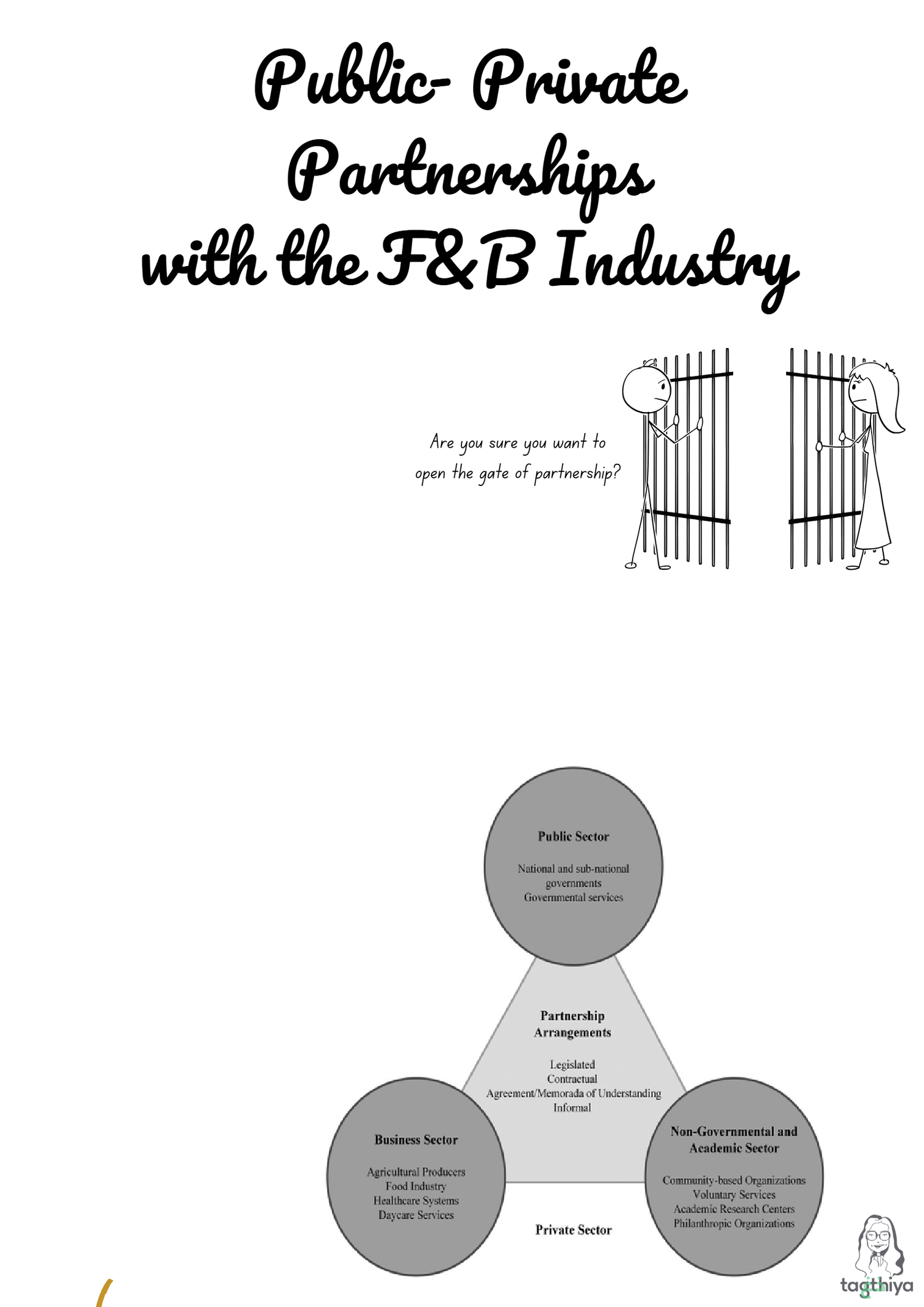
Public- Private Partnerships with the F&B Industry
In recent years, public-private partnerships (PPPs) have emerged as a popular strategy to address various public health issues, including the rise in childhood overweight and obesity. These partnerships are often touted as a win-win solution where government resources and industry expertise come together to solve complex problems.
This is a conceptual model of PPPs for childhood obesity prevention and management . But are these partnerships truly beneficial, or are they merely a mirage, masking underlying conflicts of interest?

The Promises The Reality
The power of the F&B industry has notably increased within the context of growing preferences for PPPs, which broaden corporate influence in policy decision-making. These partnerships occur at both national and international levels and involve various combinations of stakeholders from government, industry, and civil society.
Activities facilitated by PPPs include food reformulation and fortification, consumer education, labeling, direct food provision, and research.
Proponents of PPPs: these collaborations can leverage the strengths of both sectors. The government can benefit from the innovation, efficiency, and funding that the private sector can provide, while the food and beverage industry can gain credibility and public trust by aligning with public health goals
By hiring in-house nutritional experts, F&B companies have increased their capacity to participate effectively in these PPPs, thereby shaping food policy and regulatory frameworks. This strategic involvement often focuses on nutrient-based solutions like reformulation, which can shift the focus away from broader structural issues such as the widespread availability and aggressive marketing of UPFBs.
This focus tends to depoliticize the food environment by diverting attention from these underlying determinants of unhealthy diets.

Marriage or Mirage? Navigating the mirage
Now the discussions around the efficacy of PPPs have been polarized....Some are seen to have potential to improve diet and nutrition outcomes, but there is mistrust towards the private sector and their motives.
Challenges associated with PPP: (i) governments and civil society that engage with the private sector need to grapple with actual or perceived conflict of interest, (ii) trust deficits between public and private sector actors must be overcome and (iii) compelling evaluations needed to justify partnerships over legislative and legal approaches to better health outcomes.
Public-private partnerships in the food and beverage industry present both opportunities and challenges. While they have the potential to bring about positive changes, they also risk being used as a façade to obscure ongoing practices that harm public health.

“Ta ذغ iya” by Sarah Zahr
The question remains: is it appropriate that the world’s largest food manufacturers of unhealthy foods and beverages have input into programs related to combating childhood overweight and obesity?
Ultimately, whether these public-private partnerships are a genuine marriage of mutual interests or merely a mirage masking deeper conflicts depends on the transparency and true commitment to public health exhibited by all involved parties.
1. Baker, Phillip, et al., First Food Systems Transformations and the Ultra Processing of Infant and Young child Diets: The determinants, dynamics and consequences of the global rise in commercial milk formula consumption, Maternal & Child Nutrition 17, no. 2: e13097, April 2020. 2. Michéle, Laura, et al., ‘When the SUN Casts a Shadow’, FIAN International, Society for International Development, 8, December 2019. 3. Fanzo, Jessica et al., FOOD SYSTEM PPPS: CAN THEY ADVANCE PUBLIC HEALTH AND BUSINESS GOALS AT THE SAME TIME?: Analysis and ideas for moving forward, GAIN, Discussion Paper n.6, May 2020. 4.Harrison, Megan R. "Effects of public–private partnership on diet-related obesity risk factors among school- aged children: a systematic literature review." Nutrition and Health 29, no. 3 (2023): 453-463.