
A Machiavellian Scheme? The Politics of Knowledge

big food and big pharma, Bigger problems
Machiavelli warned that rulers deceive to maintain power. Today, corporations do the same—Big Food engineers the problem, Big Pharma sells the solution, and the people are left paying for both
There is a recent controversy surrounding the attempt by Novo Nordisk to redesign the NOVA classification to become Novo 2.0 classification without the participation of its creators.
But, let’s take a step back to understand who is who and what is what
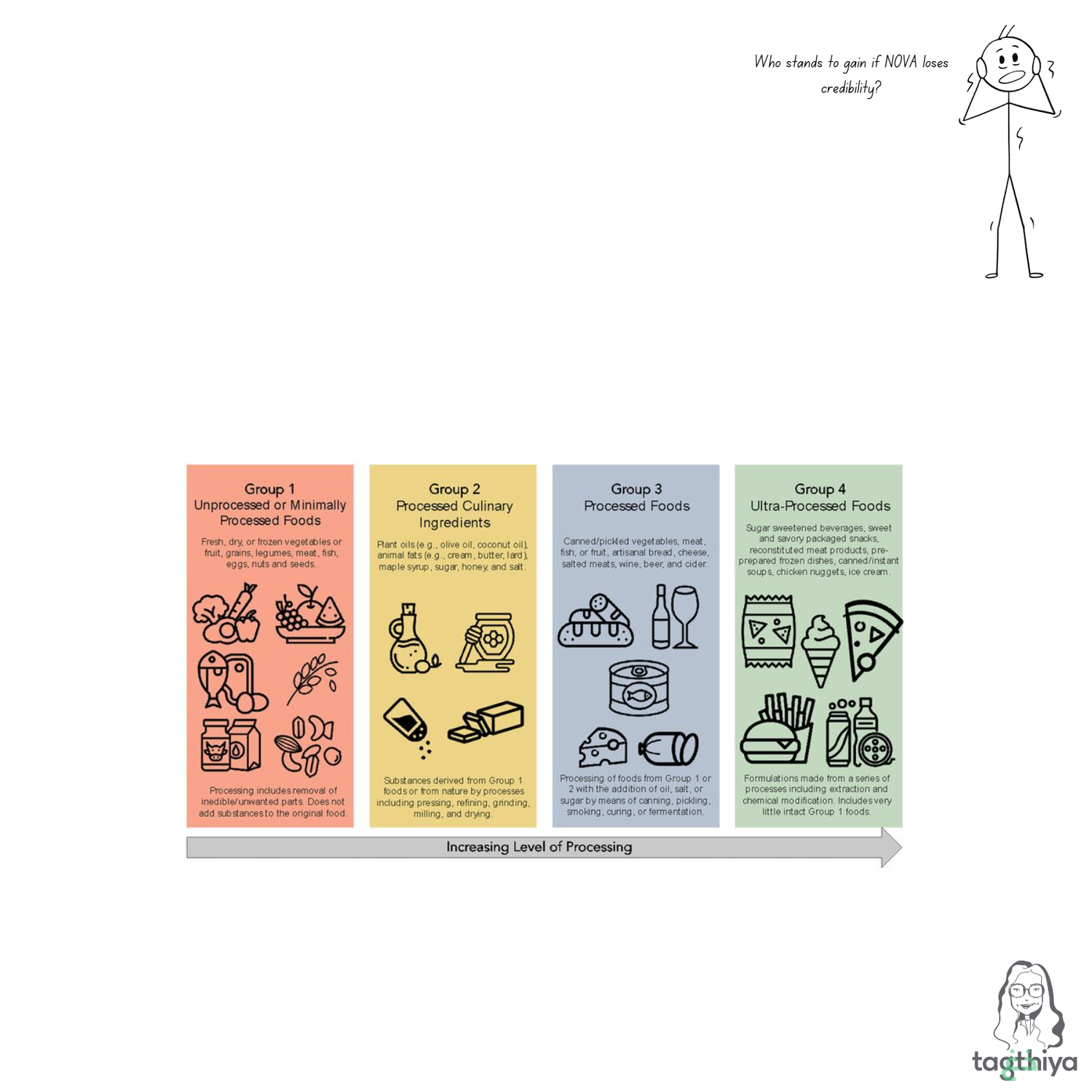
NOVA food classification system is a tool originally designed to categorize foods based on processing levels (i.e. minimally processed to ultra-processed). It was developed over a decade ago in Brazil by Professor Carlos Monteiro and his team.
Novo Nordisk is one of the world’s largest pharmaceutical companies - derives substantial profit from the treatment of diet-related diseases like obesity
Novo Nordisk is a corporation with vested financial interests in conditions such as obesity and is now funding a 2-year project that seeks to redefine the very classification system used to study the role of diet-related diseases.
They want to name it Nova 2.0 - similar to the Nova classification, particularly Nova group 4 which is also known as 'Ultra-Processed Food’.
Confusing right?
The Nova ultra-processed food score is used by WHO and FAO to monitor diet quality globally. Many governments use the original definition for policy purposes and it has been cited in over 100s of research studies.
This idea was suggested, and is being promoted, by scientists who have been paid by food companies including McDonald's, Nestlé and others.
Those that are arguing with the re-classification claim that the NOVA is imprecise in classifying ultra-processed foods and requires and update.
and those against the the re-classification or usage of the name “NOVA” have clearly stated the folllowing:
“Do not use the term Nova in the title or objectives of your project, refer to your project as an improvement or new version of the Nova classification, [or] suggest or imply that your project has any connection with the Nova classification or its creators”
Springer
So what?
The Nova 2.0 meeting is a collaboration between two industries that benefit from the obesity crisis - their interests are not always aligned with public health or the effective classification of unhealthy food for policy or research.
“Ta ذغ iya” by Sarah Zahr
The adjustment and renaming of food classification systems by industry may feel trivial, but such proposals create years of delay and confusion for the public and policy makers.
Monteiro, C. A., Cannon, G., Levy, R. B., Moubarac, J. C., Louzada, M. L., Rauber, F., ... & Jaime, P. C. (2019). Ultra-processed foods: what they are and how to identify them. Public health nutrition, 22(5), 936-941.
Martinez-Steele, E., Khandpur, N., Batis, C., Bes-Rastrollo, M., Bonaccio, M., Cediel, G., ... & Monteiro, C. A. (2023). Best practices for applying the Nova food classification system. Nature Food, 4(6), 445-448.