
Revolving Door Between the Government and Food Industry
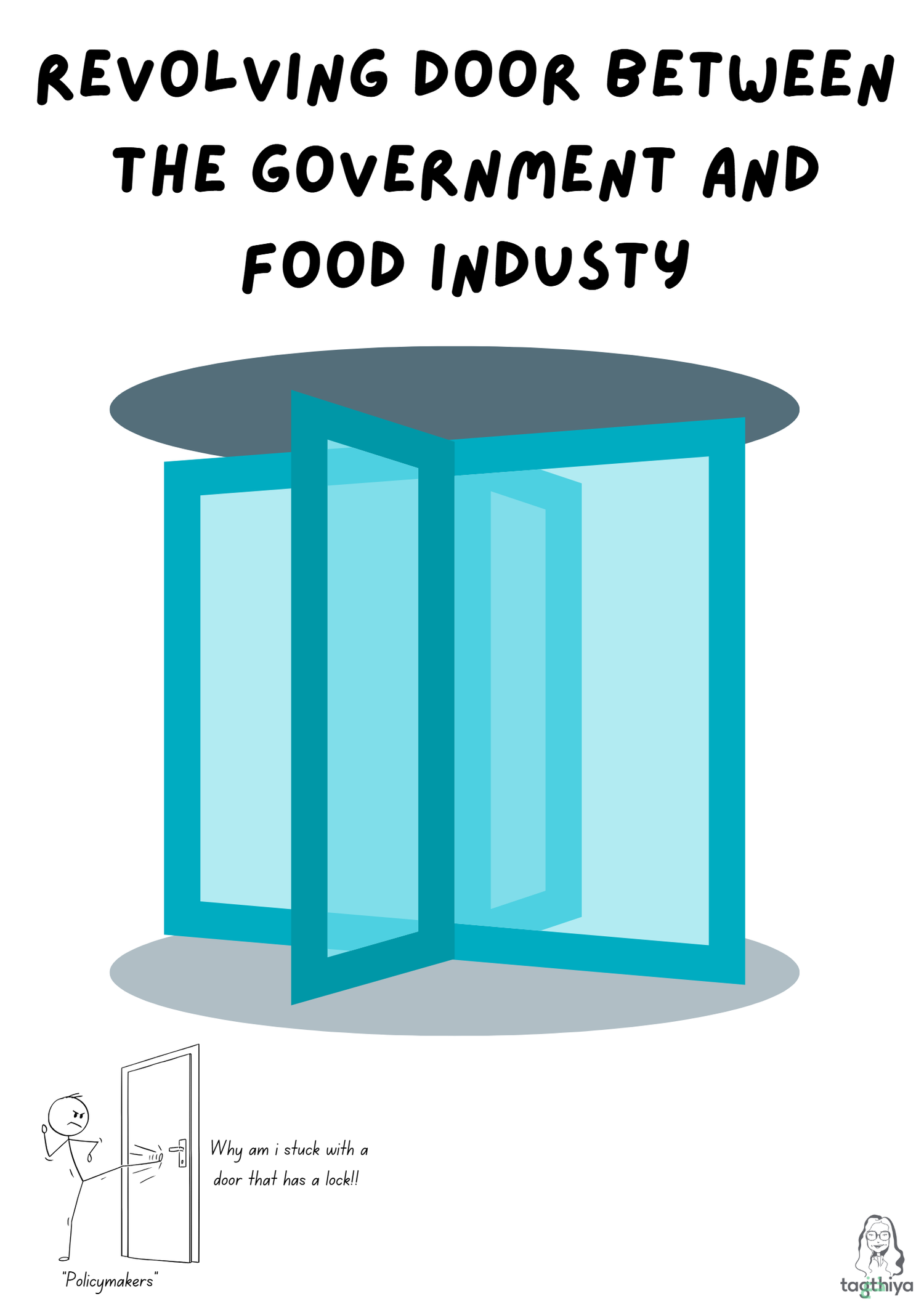

you ' ll scratch my back and I ' ll scratch yours
A concerning revolving door between the food industry and government regulatory agencies is allowing corporate interests to take priority over public health.
The revolving door brings government experts into food trade associations/org. where they can help food companies meet—but also avoid—regulations.
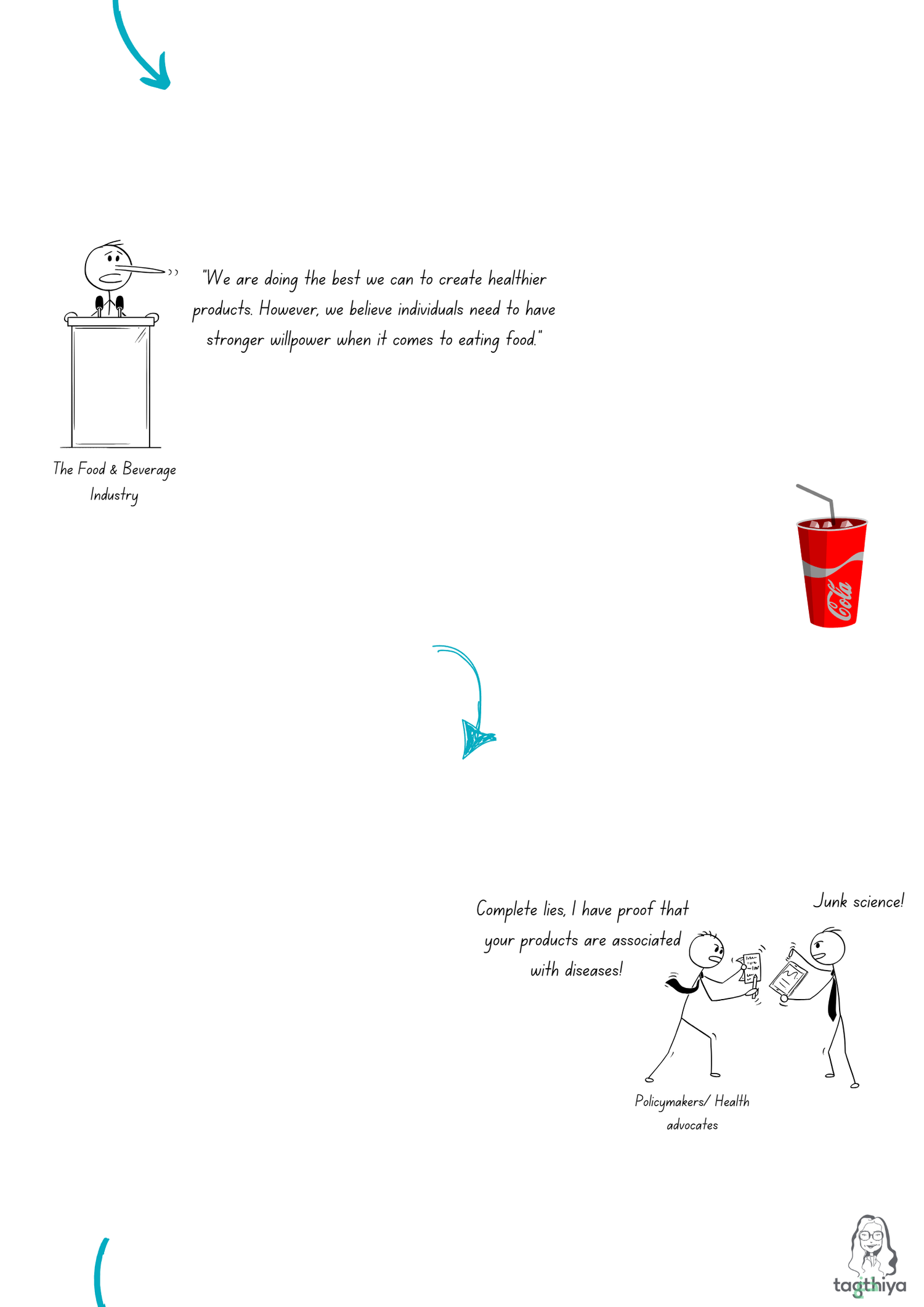
The food and beverage industry's primary motive is profit, which often contradicts promoting healthy diets and foods. By deploying certain tactics, Big Food has been able to deflect attention away from how its products contribute to chronic diseases.
Coca-Cola has been the biggest spender when it comes to money targeted annually for lobbying since 2015. In 2021, it spent around $5.83 million on 24 lobbyists.
Lobbying for such industries is like insurance- just like the saying goes “if you’re not at the table, you might be on the menu”.
Lobbyists routinely transition from Congress, the FDA or the USDA to work on behalf of a company or trade group — bringing with them their close connections and insight.
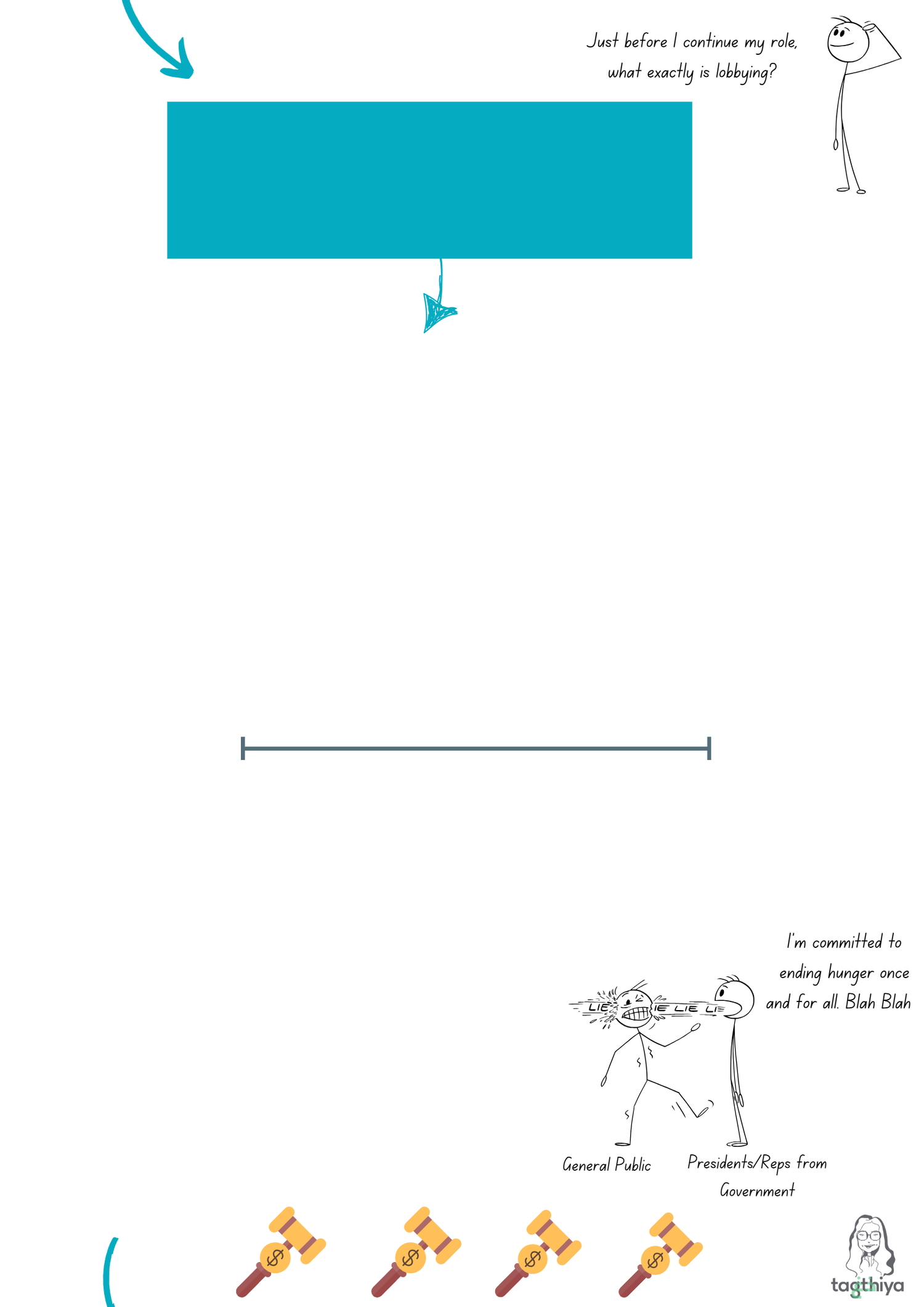
Lobbying is when an individual or a group shares their opinions on an issue with government officials, to influence policy.
Lobbying can range widely from directly engaging with politicians to finding academic papers or shaping public perception through social media campaigns.
Now in the context of economic growth and inequality, several presidents around the world have worked with food industries to help achieve their broader goals:
DECREASE POVERTY ERADICATE HUNGER IMPROVE JOB SECURITY
For example, in 2012 to 2018, Mexican President Enrique Peña Nieto was committed to eradicating hunger through his National Crusade Against Hunger campaign. His success benefited from partnerships with major food companies, including Nestle

“Ta ذغ iya” by Sarah Zahr
It is clear that the infiltration of industry interests into public health policy-making spaces dilutes the effectiveness of measures intended to protect the public.
However, there will always be a way to counter the influence of major food and beverage corporations to promote healthy consumers and not healthy profits!
Sources
- The revolving door keeps turning Marion Nestle, Food Politics, 2020
- Where the dollars go lobbying a big business for large food and beverage c Food Dive
- Dec23 food industry lobbied government ministers Sustain
- Overpowering food industry Think Global Health