
Wherever You Go, I'll Follow: How Junk Food Marketing Stalks Us

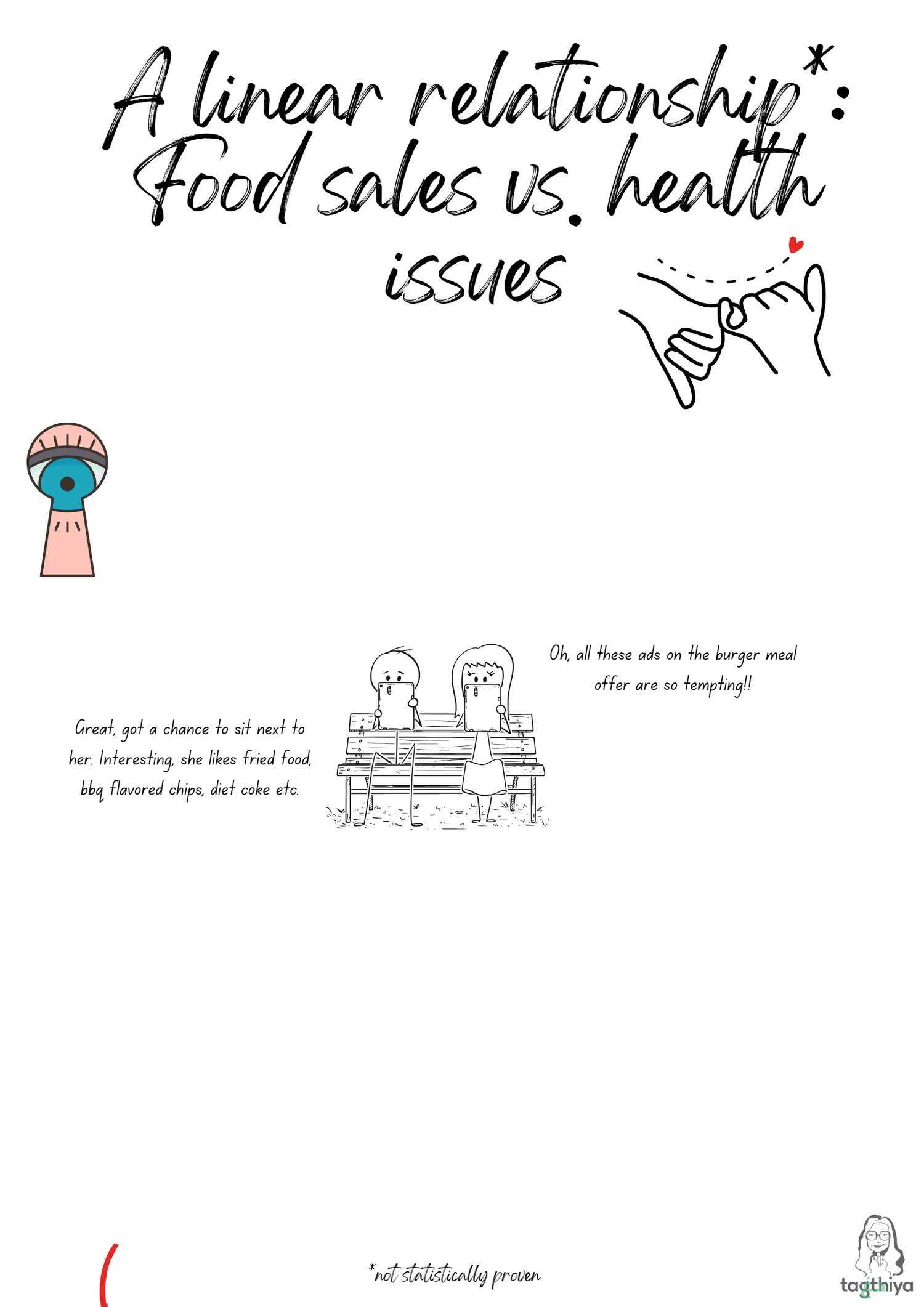
A linear relationship*: Food sales vs. health issues
Imagine you're being followed by a creepy stalker - lurking in the shadows, tracking your every move. As unsettling as that sounds, it's a disturbing reality we face regarding our health and the prevalence of unhealthy food choices.
No matter where you turn, calorie-dense, nutrient-poor foods seem to lurk around every corner - fast food chains, vending machines, even grocery store aisles.
And just as a stalker pursues their target, the aggressive marketing tactics of the unhealthy food and beverage industry seem to speak to many, luring them in. Despite efforts to promote healthier choices, sales of these unhealthy offerings continue to rise, much like a stalker who refuses to be deterred from their obsessive pursuit.

And over time, this cycle has the potential to contribute to the rise of chronic health issues like obesity, type 2 diabetes, and cardiovascular diseases.
According to Forbes Global 2000 the top 25 companies in the food sector generated $1.5 trillion in revenue in the past year (2023), while profits in the sector increased to more than $155 billion.
For example: Coca-Cola revenue for the twelve months ending December 31, 2023 was $45.754B, a 6.39% increase year-over-year .
And... with the rise in food sales, chronic diet-related disease rates increases.
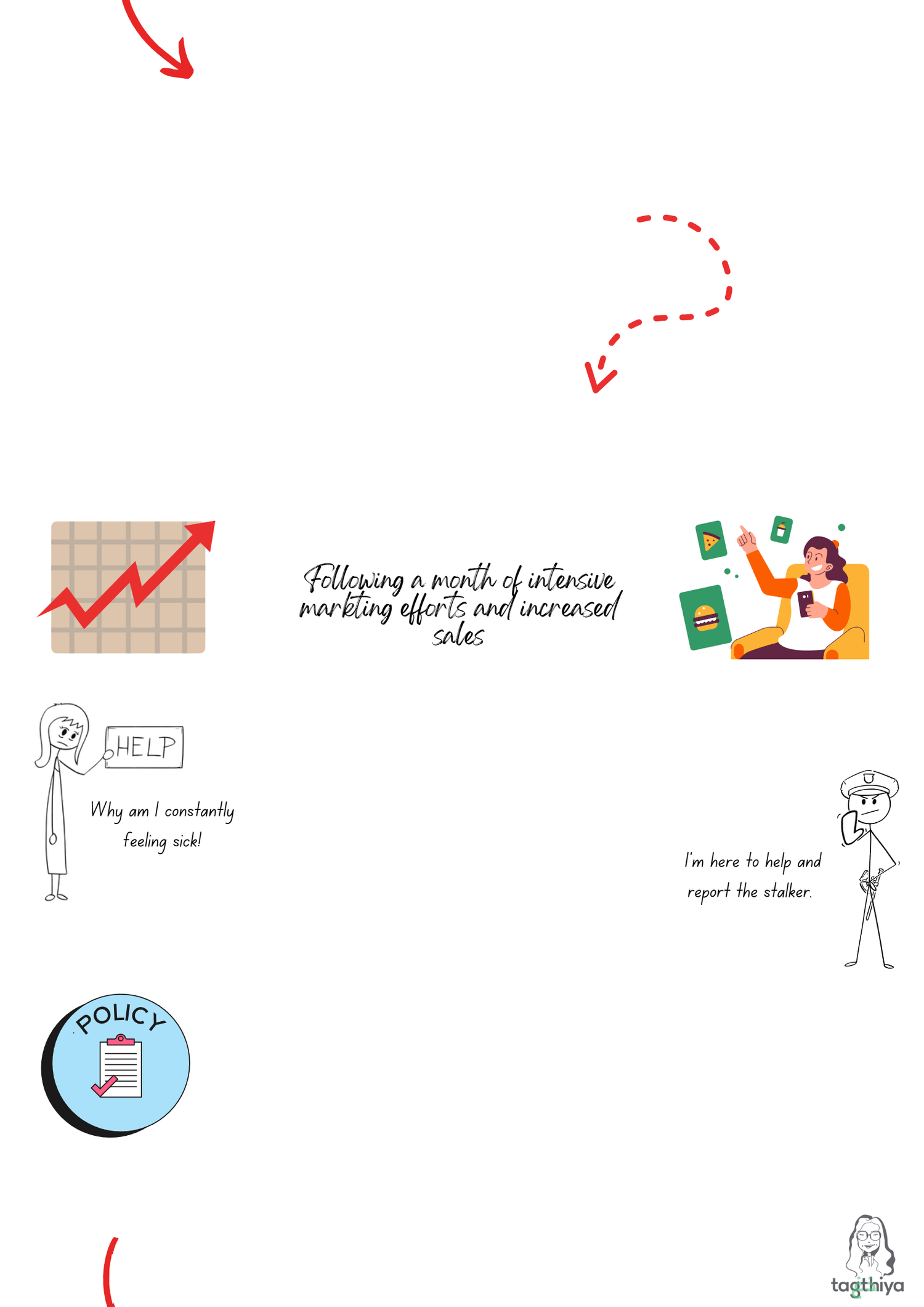
A recent extensive research article found direct associations between exposure to ultra-processed foods and 32 health parameters spanning mortality, cancer, and mental, respiratory, cardiovascular, gastrointestinal, and metabolic health outcomes.
It is also projected that the number of adults living with obesity will rise from 0.81 billion in 2020 to 1.53 billion in 2035!
Just as stalkers are reported and caught for their unacceptable behavior, we need policymakers to consider and implement a wide range of policies to reduce the “obesogenicity” of the environment– an environment that is fueling the alarming rise in diet-related diseases.

The End “Ta ذغ iya” by Sarah Zahr
These policies and regulations could take forms such as: (i) implementing fiscal measures like taxes or levies on sugar- sweetened beverages, (ii) requiring informative nutritional labeling on the front of packaged foods and beverages, and (iii) reducing children's exposure to promotional marketing of unhealthy foods and beverages.
Sources
- Lane, M. M., Gamage, E., Du, S., Ashtree, D. N., McGuinness, A. J., Gauci, S., ... & Marx, W. (2024). Ultra-processed food exposure and adverse health outcomes: umbrella review of epidemiological meta-analyses. bmj, 384.
- World Obesity Atlas 2024 World Obesity Federation, 2024
- What's The World's Largest Food Company? Forbes, 2023