
Sugar Rush Mountain Ride: Junk Food at Theme Parks
It is time to improve theme park food
Amusement parks are supposed to be fun places for kids, full of excitement and adventure. Yet, many popular parks are also filled with temptation in the form of unhealthy treats like ice cream, cotton candy, hotdogs, and slush beverages.
There is still little research focused on the importance of limiting unhealthy food in theme parks, let alone research examining kids’ meals at these parks.
Interestingly enough, consumer behaviour and food research show that contexts like leisure parks, sporting events, or music events contexts increase the likelihood that individuals would prefer unhealthy foods.
check check
There are several reasons craving unhealthy food such as taste preferences, social norms, and the context itself.
Another reason could be the implicit learned associations that contribute to individuals preferring certain foods over others. For example:
Cinemas
Kid’s birthday
Similarly, theme parks are linked with eating cotton candy, ice cream, nachos and candy following rollercoaster rides.
Now back to selling and advertising unhealthy food at theme parks- A recent study examined kids’ meal menus at the largest theme parks in the world. One of which was Disneyland Paris.
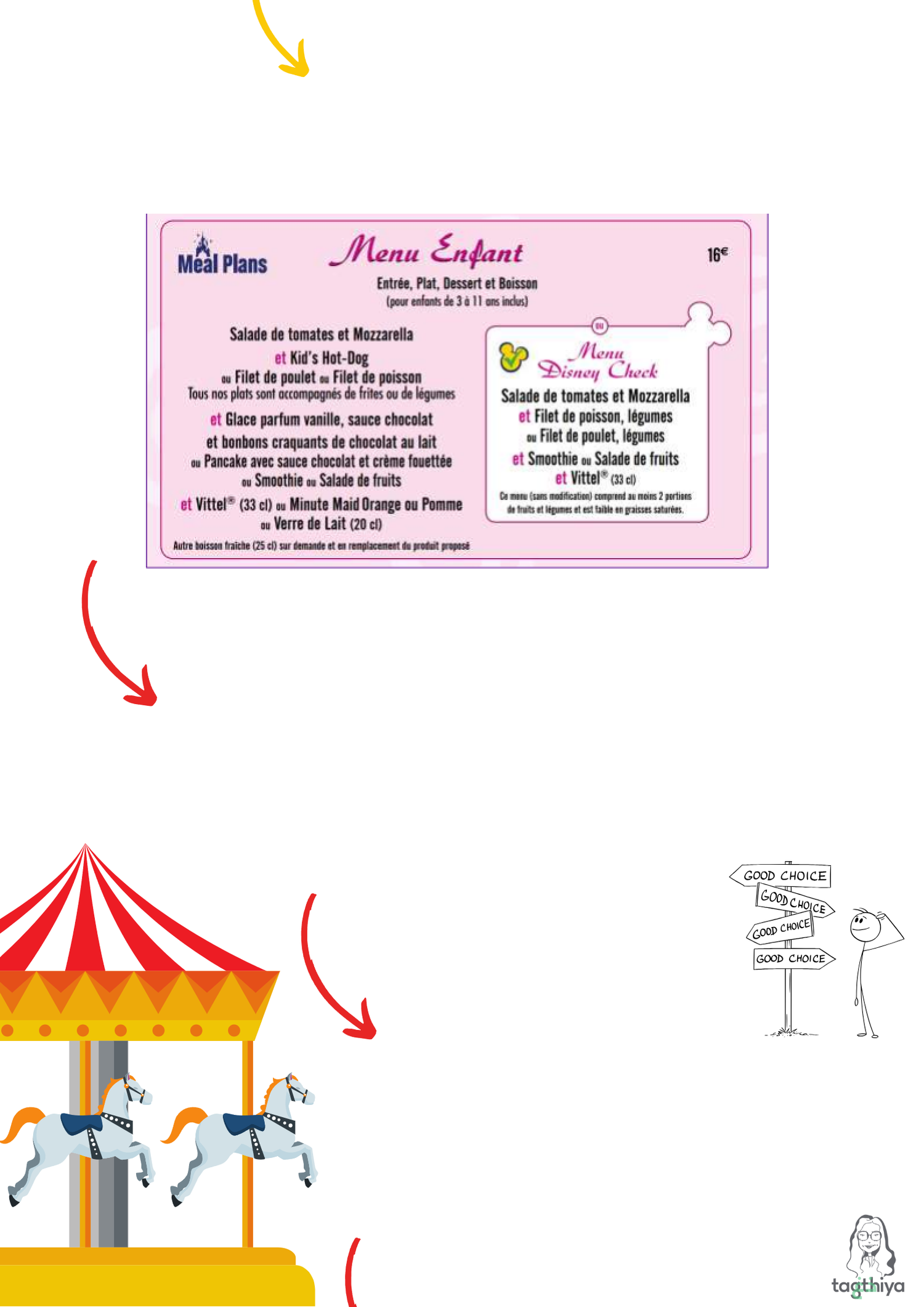
The results showed that 5 out of the 8 restaurants analyzed at Disneyland Paris offered unhealthy items on the menu such as fried fish and processed red meat.
Disneyland Paris, 2023.
Such studies have important implications for public health policies and practices.
There is a need for healthier food availability and food policy at theme parks in general and the restaurants there in particular.
For instance, theme parks should consider replacing some of the fried and sugar-related foods with healthier options like fresh fruit cups, veggie sticks and hummus, grilled chicken sandwiches, or frozen yogurt.
“Ta ذغ iya” by Sarah Zahr
Other solutions could be 1) incentivizing stakeholders to offer relatively more healthy food and drinks; 2) making unhealthy food and drinks less accessible and vice versa for healthier ones by changing menu defaults; or 3) making unhealthy food and drinks less available by forced policy changes.
Fusté Forné, M. (2023). Evaluating children's menus in theme park restaurants. Journal of Sustainability and Resilience, 3(2), 2.
Koenigstorfer, J. (2018). Childhood experiences and sporting event visitors’ preference for unhealthy versus healthy foods: Priming the route to obesity?. nutrients, 10(11), 1670.
Peters, J., Beck, J., Lande, J., Pan, Z., Cardel, M., Ayoob, K., & Hill, J. O. (2016). Using healthy defaults in Walt Disney World restaurants to improve nutritional choices. Journal of the Association for Consumer Research, 1(1), 92- 103.