
Too Many Cooks Spoil the Broth: The Battle Part 2
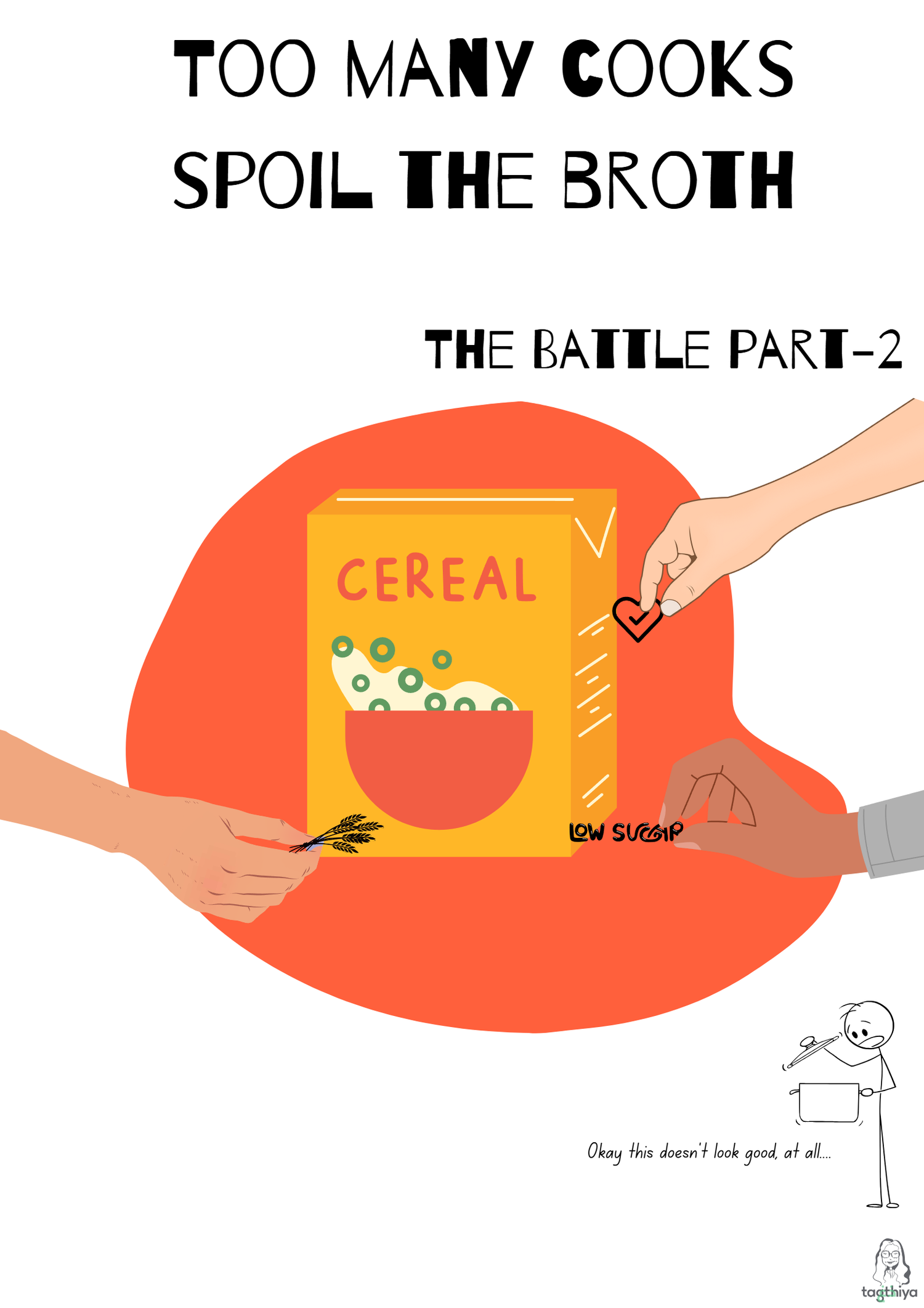
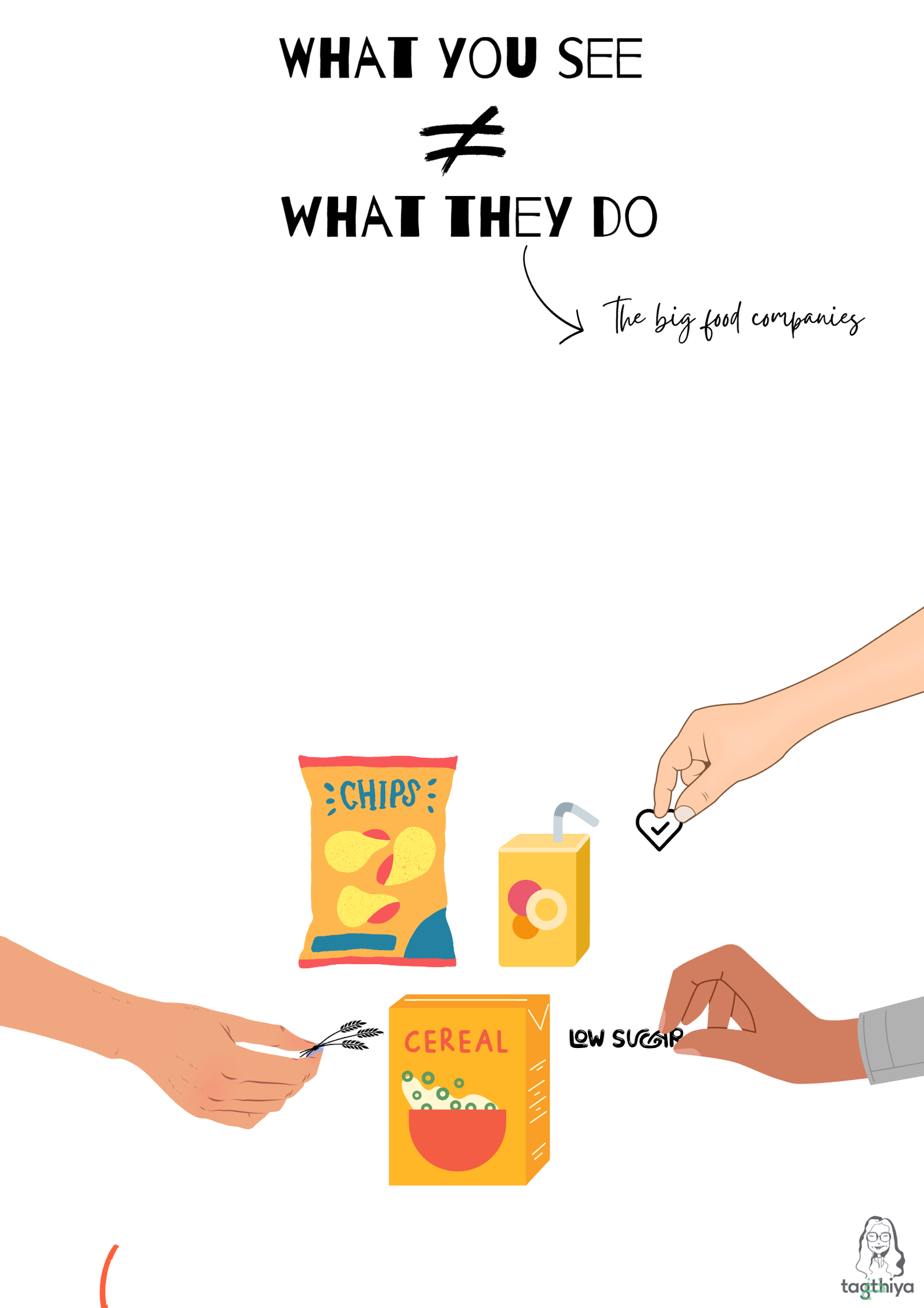
What you see what they do the big food companies
In part 1 of “The Battle: big food companies vs food policies”, we discussed how the industry deploys coordinated global practices to avoid regulation and protect their profits and consumers’ loyalty.
Behind all the labels placed by industries lie dirty tactics used to weaken food policies set by governments:
Regulation Loopholes
Individual blaming
Corporate washing
The industry’s playbook
The food & beverage industry employs a broad spectrum of tactics and practices to undermine or halt the progression of food policies at various levels, including international, national, and local. While these efforts differ somewhat across regions, they follow a widely recognized set of tactics.
Similar to the tobacco, alcohol, breastmilk substitute, and other major industries, the food & beverage industry adopts comparable strategies to influence policy.
Many of the strategies and actions taken by these industries do not violate laws directly. Instead, they exploit existing gaps in national laws and engage in questionable and unethical behaviors.
EXAMPLE # 1 OF A TACTIC
WHAT THEY SAY: Food industries imply that their products contribute to health, the environment, and society
WHAT THEY DO: Block the development and implementation of healthy food policies.
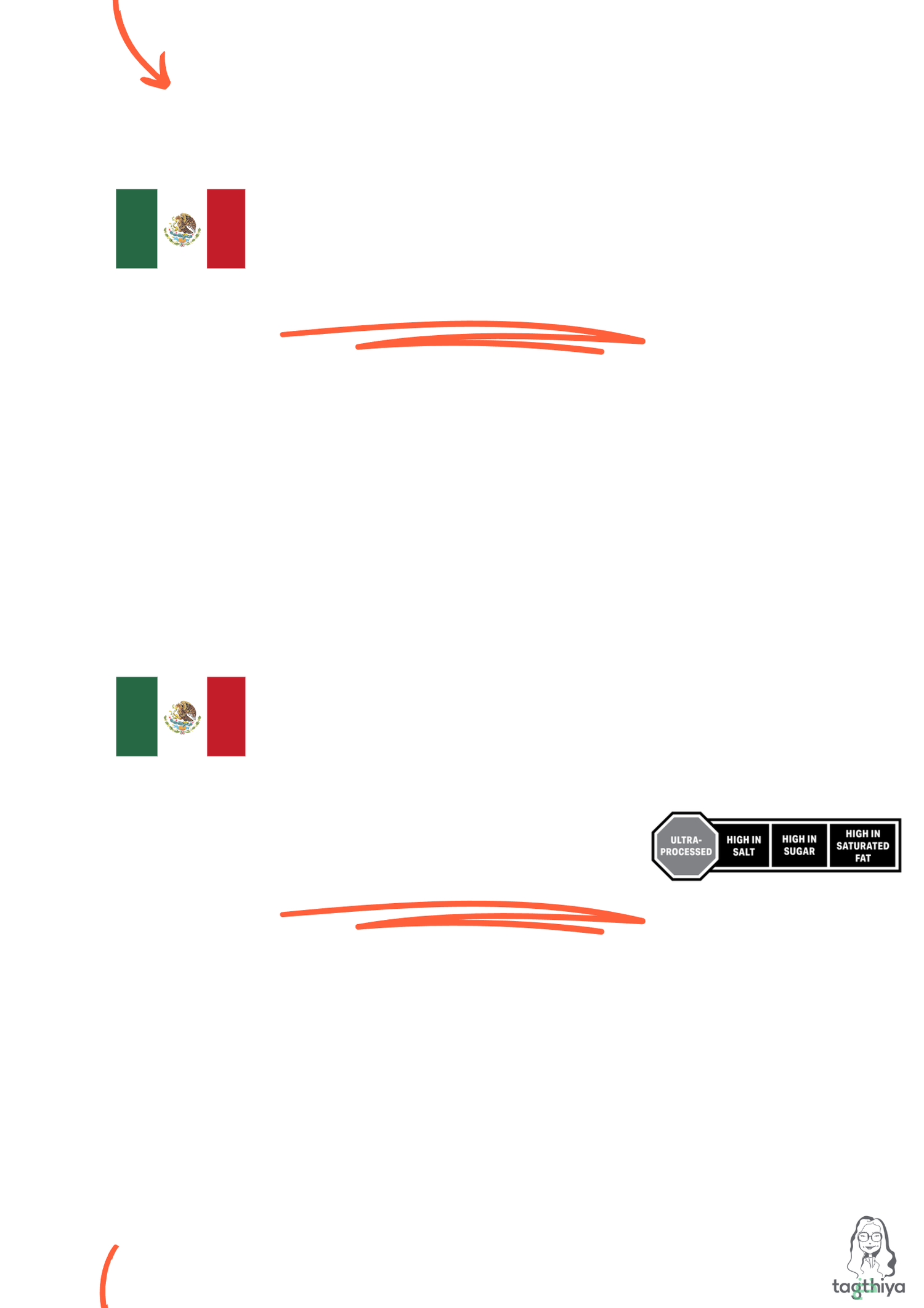
In Mexico: The Food industry has been using ingredients such as lactase, an enzyme used to sweeten flavored milk, to avoid warning labels on their packages.
EXAMPLE # 2 OF A TACTIC
WHAT THEY SAY: Food industries seem to agree with front-of-pack nutrition-labelling (FOPL) on products.
WHAT THEY DO: Seek loopholes in regulations to continue promoting ultra-processed products.
In Mexico: After the implementation of a warning FOPL regulation, the Food industry has been implementing many tools to undermine the policy effectiveness, such as placing children’s cartoon characters on the product itself rather than the packages and through workarounds at the point of sale at supermarkets.
EXAMPLE # 3 OF A TACTIC
WHAT THEY SAY: Food industries seem to agree with FOPL on products.
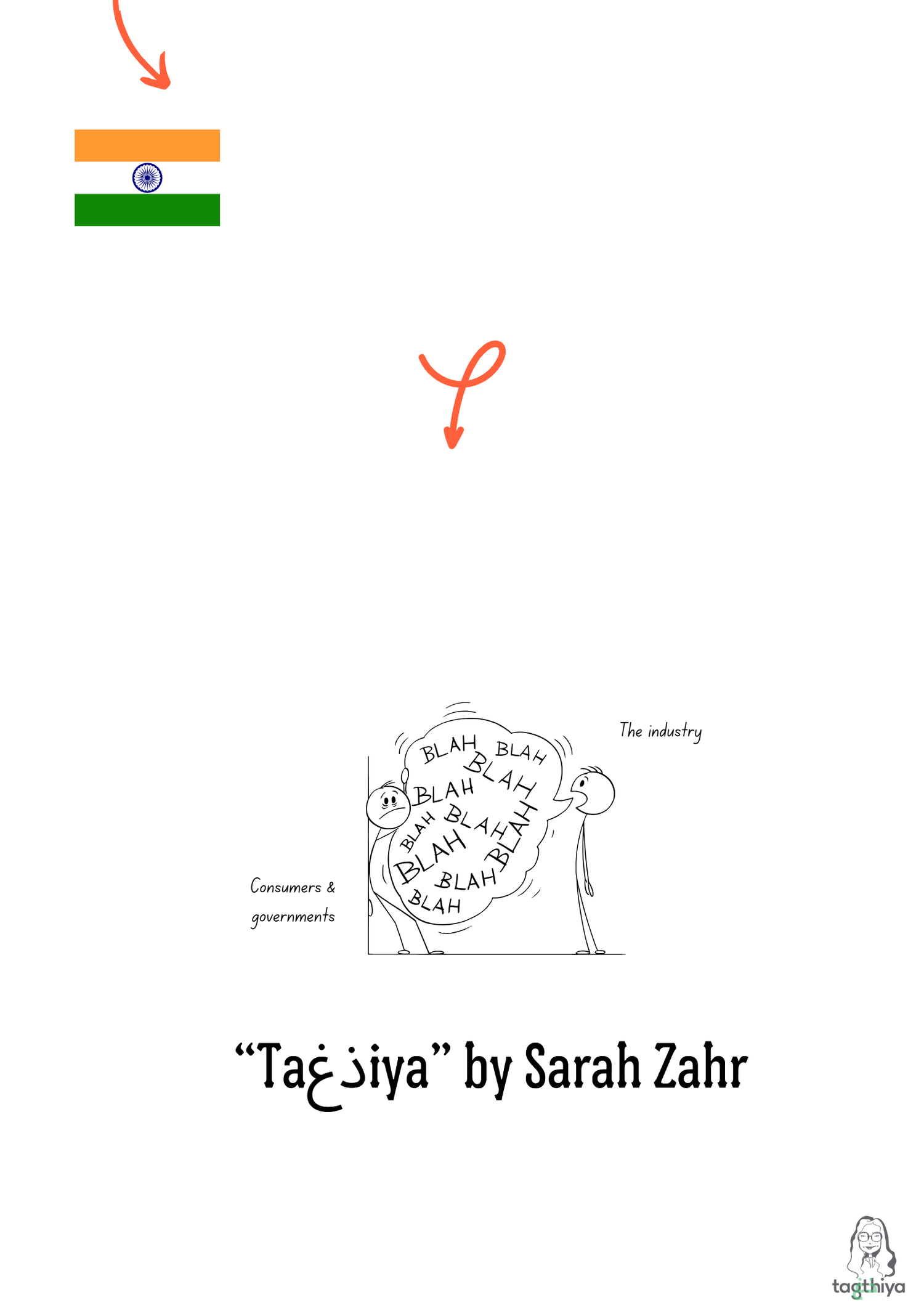
WHAT THEY DO: Divert attention from its corporate responsibility on the damage to environmental and human health to blame individuals for their behaviors.
“Ta ذغ iya” by Sarah Zahr
In India: While advocates are working toward implementing a FOPL policy to protect the population from the harmful health effects of foods high in sugar, fat, salt etc., the industry is trying to shift the public discourse by blaming consumer preference and taste for the non-marketability of packaged food low in fat, sugar, and sodium in the country.
Just as too many cooks in a kitchen can lead to a lack of coordination and ruin a dish, too many companies trying to affect food policies just as nutrition labelling can lead to a cluttered and less transparent system.
Sources
- Global Health Advocacy Incubator. (2021, November 17). Behind the Labels: Big Food's War on Healthy Food Policies. Advocacy Incubator. labels-big-foods-war-on-healthy-food-policies Global Health Advocacy Incubator Global Health Advocacy Incubator