
New Year, New Ads? Junk Food Marketing to Children

What governments could change to avoid breaking New Year's resolutions
The globalization of food systems is driving a transition towards unhealthy food environments where highly processed, unhealthy foods and beverages are now more available, convenient, cheaper and promoted than ever before.
Multinational food companies are creating harmful strategies to promote products that are profitable for companies but detrimental to health and nutrition, such as junk food, smoking, alcohol, etc.
Studies have shown that compr ehensive, national, mandatory legal measures and policies can shape healthier food environments for children.
The widespread availability of UPFs and their aggressive marketing in settings where children live, learn, and play make avoiding exposure to these foods virtually impossible.
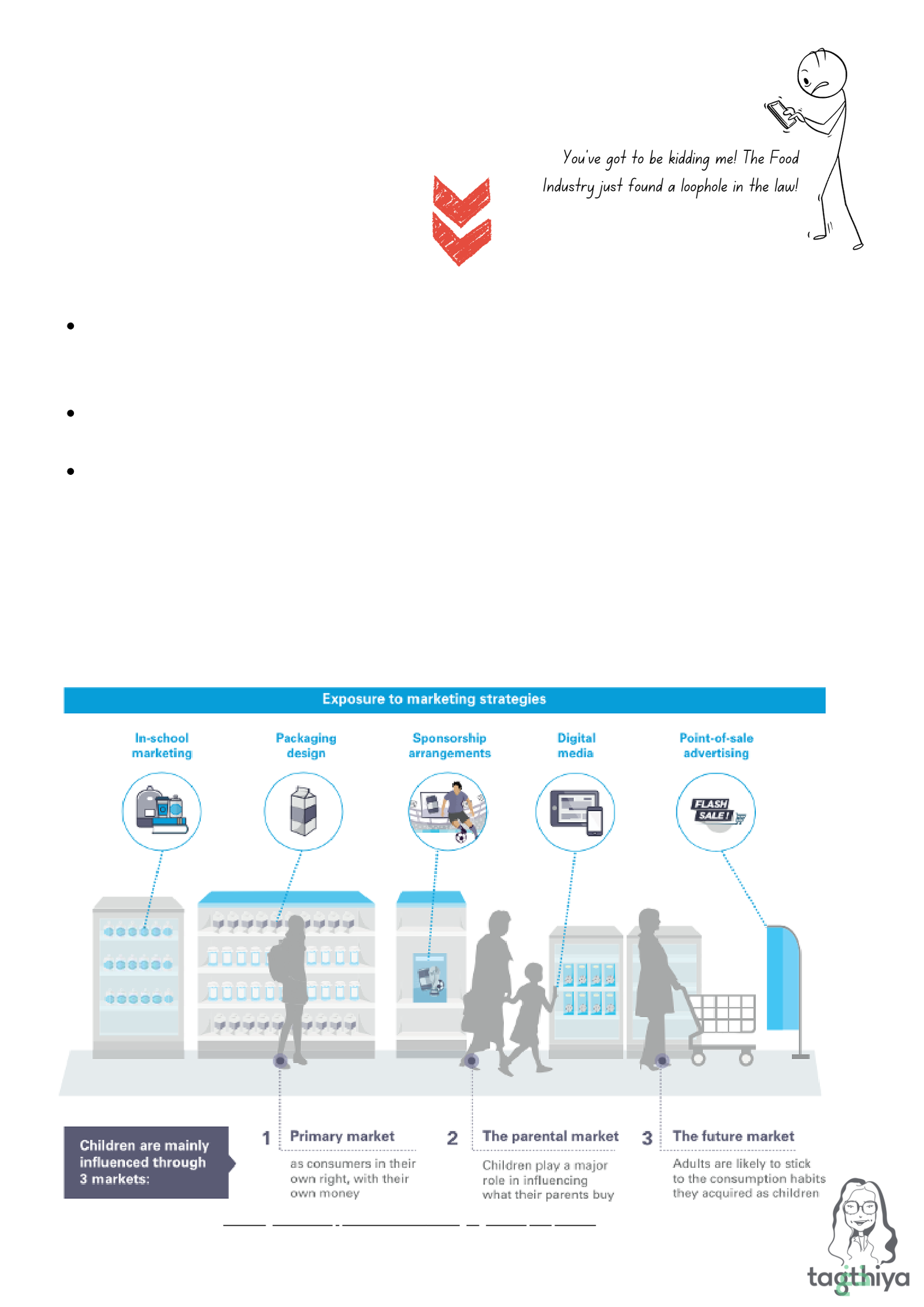
For starters, there are different types of marketing used by unhealthy food companies.
Advertising and promotion: The paid public presentation of ideas, goods, or services to bring a product or brand to the attention of consumers through a variety of media channels. Sponsorship: Any form of monetary or in-kind contribution to any event, activity, group or individual. Cross-promotion : A technique in which a company attempts to sell a product that is related to a different product the consumer already uses or which the marketer has available.
And below are examples of children’s exposure to marketing strategies by Big Food Industries:
United Nations Children’s Fund, A child rights-based approach to food m arketing: a guide for policy makers , UNICEF, New York, April 2018.

Food and beverag e companies use many tactics to protect their profits, including trying to stop governments from regulating them. Here’s what governments can do to counteract:
1) Voluntary promises won’t protect children
Companies often argue that self-regulation is efficient and will save governments the work of needing to develop, implement, monitor and enforce laws. HOWEVER , self-regulation has repeatedly failed. Conflicts of interest are built into the system: the same companies that profit from the aggressive marketing are the ones designing the rules, deciding when they are broken, and choosing whether consequences apply.
That’s why mandatory laws are the go-to evidence-based approach that governments can use to protect children from unhealthy food marketing.
2) Banning ads “aimed at children” only misses most of the problem
When governments ban only ads directed at children, companies rarely stop marketing. They simply change the wrapper, not the message.
Bright colours disappear. Cartoons are replaced. But the same products continue to appear on billboards, social media feeds, during sports events, and in content clearly seen by children and by parents.
To be protective, laws must restrict all marketing that children are exposed to, including marketing that influences the purchasing decisions of parents and caregivers.

“Ta ذغ iya” by Sarah Zahr
3) If brand advertising isn’t covered, the ads never really stop
O ne of the biggest loopholes in food marketing laws is brand advertising. Even when specific unhealthy products are restricted, companies can continue to promote logos, colors, slogans etc without showing a single product.
If governments regulate only TV ads, marketing moves online. If they regulate cartoons, brands use influencers. If they regulate schools, ads show up in games, apps, and sports.
Over time, this builds recognition, trust, and loyalty, especially amo ng children, long before they are making purchasing decisions themselves.
That’s why effective laws must restrict not only unhealthy products, but also the brands associated with them.
Sources
- Freeman, Becky, ‘Young adults : beloved by food and drink marketers and forgotten by public health?’ Health Promotion International,
- Protecting Children from Unhealthy Food Marketing: A toolkit for developing effective laws. UNICEF: unhealthy-food-marketing-toolkit-31 Child nutrition and development knowledge.unicef.org