
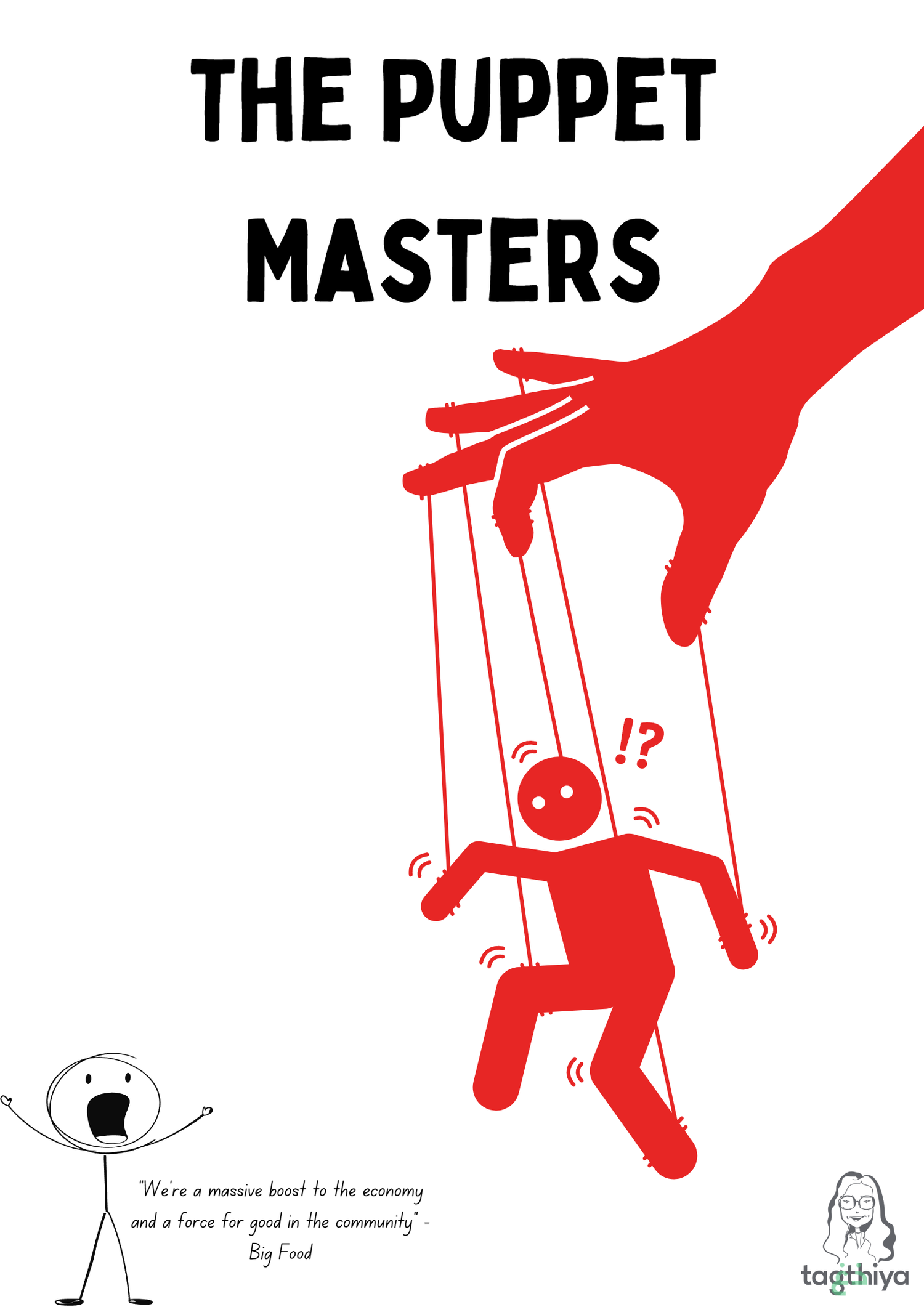
The Puppet Masters: How Big Food Shapes Food Policy
How the UPF industry pulls the strings behind policies
The Opening Scene:
The rise of ultra-processed foods (UPFs) in human diets is damaging public health, fuelling chronic diseases worldwide, and deepening health inequalities. The unhealthy food environments are heavily shaped by commercial interests.
Act I: The Script Was Never Ours
Behind the curtain, the industry pulls invisible strings, lobbying, stalling, funding think tanks, and framing debate. They present themselves as “partners” while promoting policies that delay change.
While in reality,
The UPF industry generates enormous revenues that support continued growth and fund corporate political activities to counter attempts at UPF regulation.

Understanding Big Food corporate strategies is crucial to inform societal responses to UPFs that focus on reducing corporate power.
The purpose of ultra-processing is profit maximization.
The UPF industry’s core business model depends on using cheap commodity ingredients and industrial manufacturing technologies to minimize cost and intensive marketing and highly palatable product designs to drive repeat consumption!
Act II: Doubt is the Costume
The widespread availability of UPFs and their aggressive marketing in settings where children live, learn, and play make avoiding exposure to these foods somehow impossible........
Childcare settings, sports and recreational facilities, schools, and nearby retail outlets are frequently flooded with UPFs, including through sponsorship arrangements that by default: NORMALIZE UPF consumption!!
Also, the digital ecosystem and digital marketing have intensified this exposure. Algorithms allow children and adolescents to be targeted with great precision, delivering personalized UPF advertisements that track children across platforms.

Act III: The Food System Was Built This Way
The key driver of the global rise in UPFs is the growing economic and political power of the UPF industry, and its restructuring of food systems for profitability above all else. Composition of the UPF system described below:
UPF manufacturers at the core
Co-dependent actors that drive: production, marketing and consumtpion
These actors include ingredient suppliers, plastic producers, grocery retailers, fast-food chains, advertising firms, lobbyists, industry front groups, and research partners.
UPF System
Final Act: Cut the Strings
Although some countries have implemented measures to control industry practices and reduce UPF consumption, the global public health response is still evolving.

“Ta ذغ iya” by Sarah Zahr
The UPF industry isn’t just a supplier of products. It’s an architect of systems. Its power lies in reshaping norms, policy narratives, market structures, and even public trust. And yet, systems can be redesigned through: National action such as taxes, warning labels, marketing restrictions, school food standards Global mobilization Youth mobilization
Sources
- The high price of cheap food Food, Farming and Countryside Commission
- Baker, P., Slater, S., White, M., Wood, B., Contreras, A., Corvalán, C., ... & Barquera, S. (2025). Towards unified global action on ultra-processed foods: understanding commercial determinants, countering corporate power, and mobilising a public health response. The Lancet.