
The Bill No One Talks About: The True Cost of Obesity
The cost of overweight and obesity to individuals and society
Every year, a bill arrives. Not in your mailbox, not at the supermarket checkout. But somewhere in the background, it keeps growing.
Healthcare spending Lost productivity Disability Early/premature deaths
We just rarely call it what it is. The overweight and obesity bill
What’s actually on the bill?
Health costs that cascade from childhood obesogenic environments into adul t disease, disab ility, and early mortality. Healthcare system burdens: chronic disease management, hospitalizations, and longer treatment timelines. Economic costs: lost productivity, absenteeism, presenteeism, and reduced lifetime earnings.
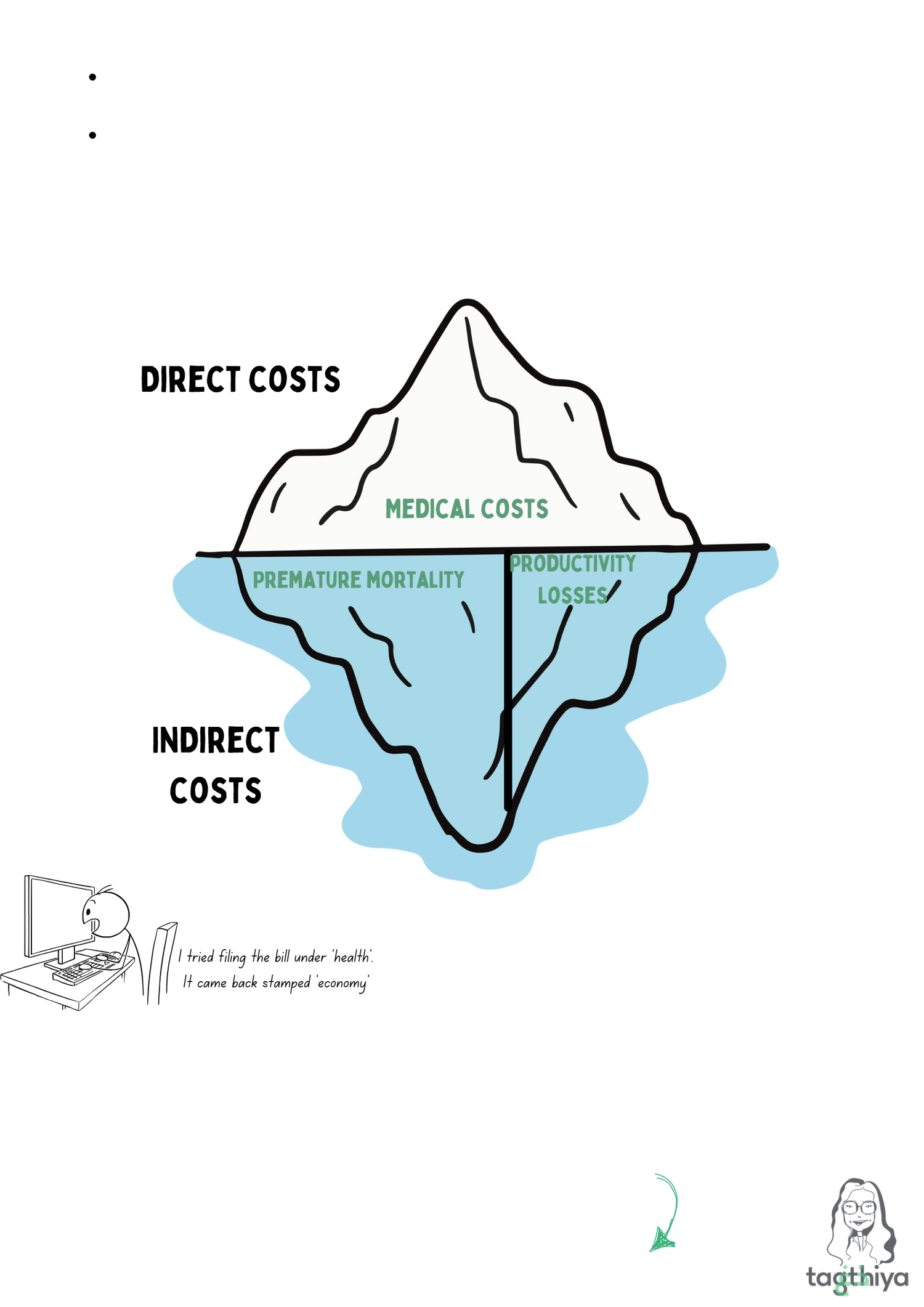
Direct costs INDirect costs
Social costs: stigma, bullying, and degraded educational outcomes for children. Intergenerational effects: today’s environments shape tomorrow’s health trajectories.
The true cost of overweight and obesity looks like an iceberg:
*adapted from World obesity Federation report on economic impacts of obesity
Where does this bill come from?
From environments carefully designed to sell indusrtially engineered food
For example:
The layout of stores, schools, workplaces, and media that makes unhealthy food and beverages (ultra-processed foods) easy, cheap, and appealing. Point-of-sale design: eye-level of unhealthy food displays, fast-food outlets near schools, and snack aisles that tempt at every corner. Marketing ecosystems: persistent advertising to children, online algorithmic targeting, and branding that blurs the line between entertainment and food promotion. The paradox of access: cheap unhealthy food and beverages satisfy energy needs but displace nutrient-rich options, contributing to malnutrition and obesity within the same communities.
These environments shape choices long before individuals feel like they are making one.
So who pays the bill?
Individuals pay through poorer health. Families pay through lost opportunities. Health systems pay through rising medical costs. Economies pay through reduced productivity. And society pays through the long shadow cast over the next generation.
So the real question is, not whether we pay, but how we can stop letting the bill from getting bigger.
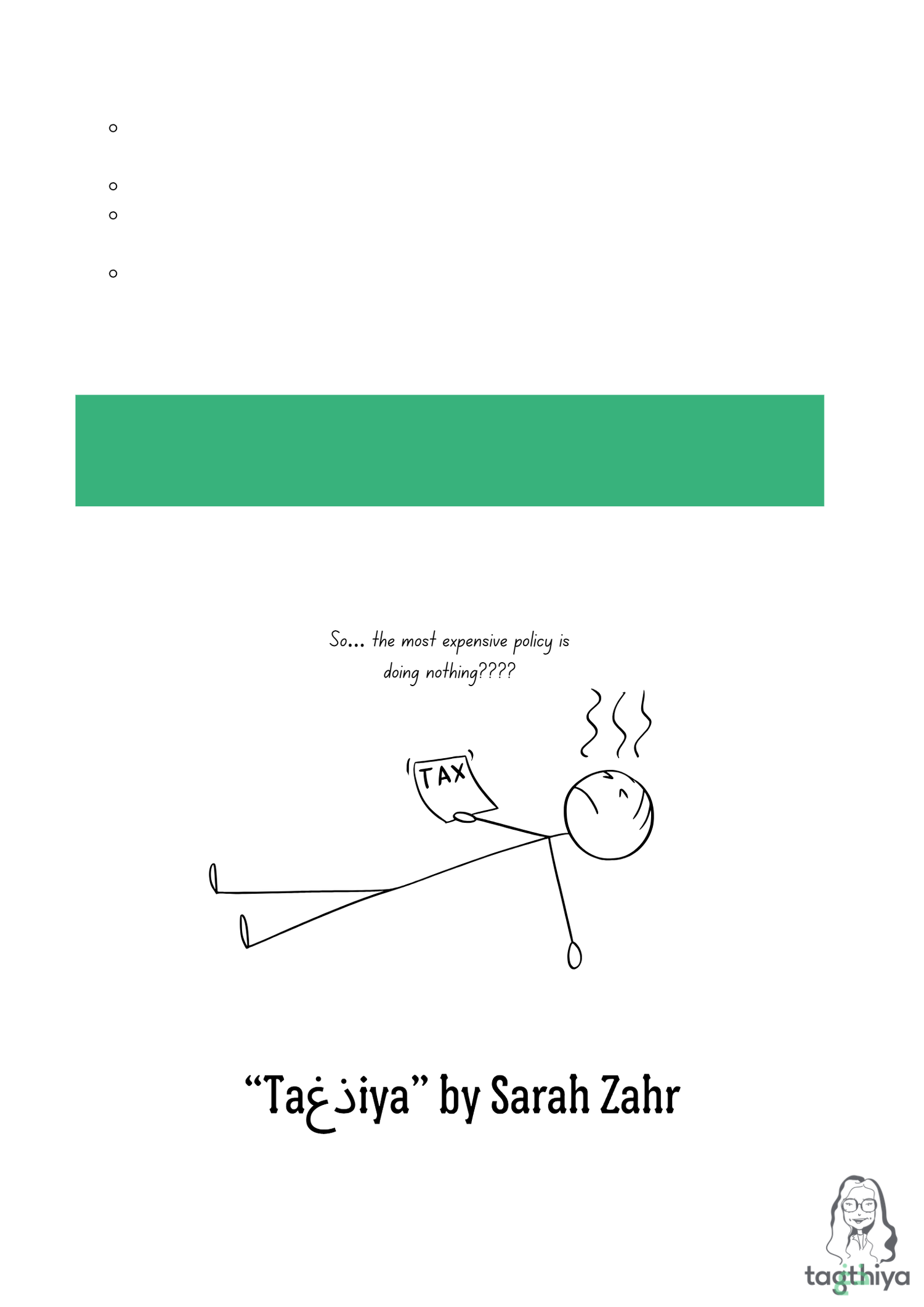
For starters: Design changes that shift default options toward healthier environments: Taxes on ultra-processed foods and beverages to reduce demand, with revenue used to subsidize healthier options in schools and communities.
“Ta ذغ iya” by Sarah Zahr
Front-of-pack labeling that is simple, visible, and unambiguous (no ambiguous “health halos”). Marketing restrictions to children, particularly around UPFs. Zoning and urban planning that incentivize access to fresh, affordable produce and limit density of fast-food outlets near schools. School and workplace food environments redesigned to make healthy choices easier, cheaper, and more visible.
If we don’t fix the environments where people make food choices, the bill keeps growing, in hospitals, workplaces, schools, and future generations.
Okunogbe, A., Nugent, R., Spencer, G., Powis, J., Ralston, J., & Wilding, J. (2022). Economic impacts of overweight and obesity: current and future estimates for 161 countries. BMJ global health, 7(9).
World Obesity Atlas 2025 (World Obesity Federation)